
Listen to Audio Dispatch Brief
The 60-second read
Evidence level:Human trials (RCT)Pairing grilled meats with fresh green herbs and crushed raw garlic is a natural biohack that activates Phase II liver enzymes to neutralize HCA and PAH carcinogens effectively.
- High-temperature grilling generates HCAs and PAHs capable of causing DNA adducts and cellular mutations.
- Chlorophyll from fresh herbs traps carcinogens within the gut lumen, blocking their systemic absorption.
- Allicin in raw garlic and EGCG in green tea stimulate the Nrf2 pathway to enhance renal excretion of toxins.
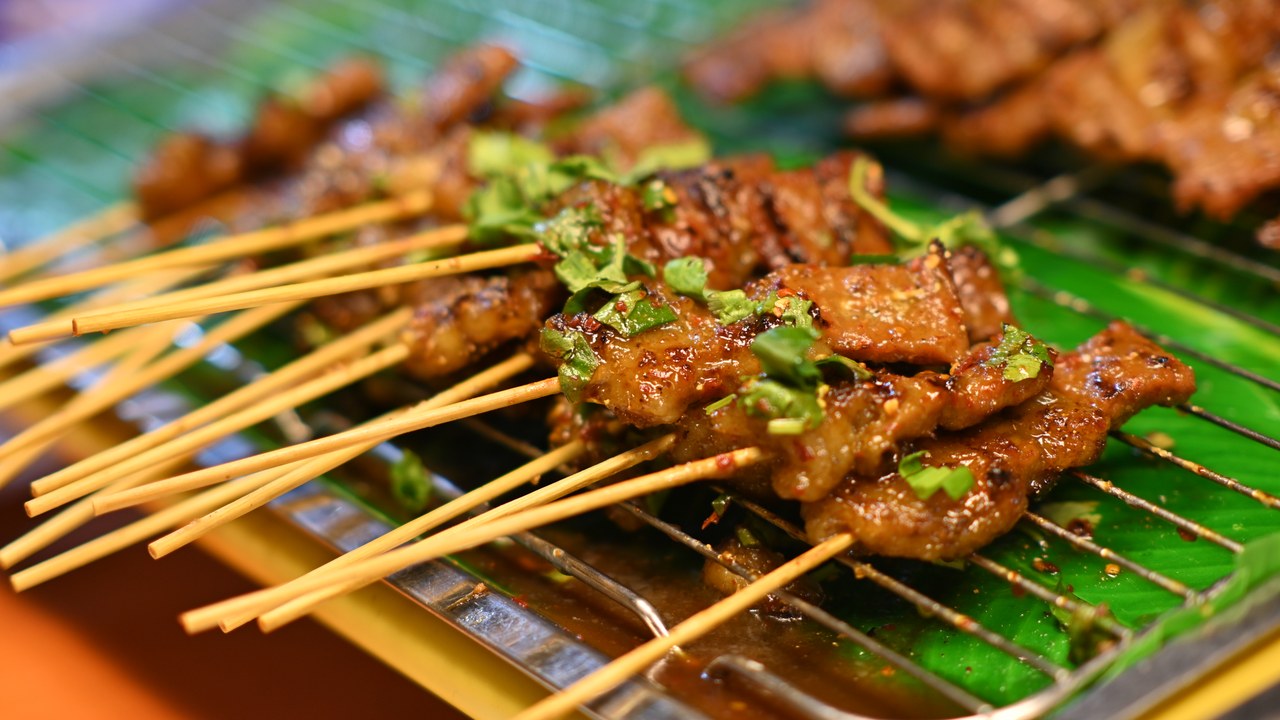
Picture a warm weekend evening: sitting with family at a street-side restaurant, breathing in the rich fragrance of charcoal-grilled pork patties. As fat drips onto hot coals, rising smoke carries an irresistible aroma. It is one of life's simple pleasures.
Yet, from a molecular biology perspective, when proteins and fats are charred at temperatures exceeding 150 degrees Celsius, complex chemical reactions transform benign amino acids into dangerous molecules known as Heterocyclic Amines (HCAs) and Polycyclic Aromatic Hydrocarbons (PAHs). These molecular intruders possess the ability to penetrate the cell nucleus and induce DNA strand breaks.
Fortunately, nature provides an ingenious defense right inside the traditional kitchen. The long-standing custom of pairing grilled meats with a vibrant platter of fresh herbs is far more than a culinary trick to cut through grease. It is a time-tested preventive medicine strategy. The synergy of fresh mint, perilla, fish mint, raw garlic, and green tea provides a potent molecular toolkit that upregulates liver detoxification enzymes, converting potent carcinogens into water-soluble metabolites for safe excretion.
"Imagine HCA carcinogens from grilled meat as burglars attempting to break into your cellular home to sabotage your DNA blueprint. Left unchecked, liver Phase I enzymes (CYP1A2) accidentally transform these burglars into highly volatile chemical explosives. However, chlorophyll and polyphenols from fresh green herbs act as a magnetic net inside the gut lumen, binding directly to carcinogens and preventing their intestinal absorption. Meanwhile, organosulfur compounds from raw garlic and EGCG from green tea act as a master switch, activating the cellular fire sprinkler system (Phase II detoxification enzymes like Glutathione S-transferase) to wash away remaining toxins safely through urine."
Molecular Pathway Flowchart
Thịt nướng nhiệt độ cao (HCAs/PAHs)
Vào đường ruột & Gan
CYP1A2 kích hoạt độc tố thành dạng gốc tự do
Chlorophyll/EGCG/Allicin từ rau tỏi
Kích hoạt con đường Nrf2 & Enzym Phase II (GST/NQO1)
Vô hiệu hóa & Đào thải độc tố qua thận
1. The Carcinogen Matrix in Charcoal Grilling and DNA Damage Pathways
When meat is grilled at high temperatures, particularly directly over open charcoal flames, two major classes of potent mutagenic compounds are generated: Heterocyclic Amines (HCAs) and Polycyclic Aromatic Hydrocarbons (PAHs). HCAs form when amino acids, sugars, and creatine react together under extreme heat exceeding 150 degrees Celsius. Meanwhile, PAHs are created when fat and juices drip onto charcoal flames, generating dense smoke filled with condensed benzene rings that adhere directly to the meat's surface.
Upon ingestion, these molecules are not immediately toxic; rather, they undergo bioactivation in the liver via the Cytochrome P450 enzyme family (specifically CYP1A2). This process inadvertently converts HCAs into reactive hydroperoxide intermediates.
These volatile free radicals exhibit strong chemical affinity for guanine bases on DNA strands, forming abnormal structural complexes known as 'DNA adducts'. When DNA adducts accumulate beyond the cell's repair capacity, genetic copying errors occur during cell division, laying the groundwork for colorectal, gastric, and hepatic malignancies.
Fortunately, our physiology is well-equipped with a two-phase hepatic detoxification system. While Phase I enzymes can render toxins more reactive, Phase II enzymes act as the critical defense mechanism, conjugating protective molecules like Glutathione to fully neutralize and solubilize these harmful compounds.
2. Scientific Decoupling: How Fresh Herbs and Raw Garlic Neutralize Toxins
A landmark clinical study published in PNAS (Proceedings of the National Academy of Sciences) demonstrated that Chlorophyllin, a water-soluble derivative of chlorophyll abundantly found in fresh herbs like perilla, fish mint, and basil, forms tight molecular complexes with planar carcinogens. These bulky complexes cannot cross the intestinal epithelial barrier, forcing the direct fecal excretion of toxins before they ever enter systemic circulation.
Furthermore, organosulfur compounds such as Allicin and Diallyl Disulfide from crushed raw garlic, combined with epigallocatechin gallate (EGCG) from green tea, serve as potent activators of the Nrf2 (Nuclear factor erythroid 2-related factor 2) signaling pathway.
Nrf2 acts as the master transcriptional regulator for Phase II detoxifying enzymes, including Glutathione S-transferase (GST) and NAD(P)H:quinone oxidoreductase 1 (NQO1). These enzymes rapidly attach hydrophilic groups to CYP1A2-oxidized HCAs, converting dangerous mutagens into harmless metabolites excreted smoothly via the kidneys.
The following table illustrates the comparative detoxification efficacy of traditional culinary bioactives:
| Natural Bioactive | Primary Food Source | Molecular Defense Mechanism | Mutagenic Risk Reduction |
|---|---|---|---|
| Chlorophyll | Perilla leaves, fish mint, lettuce, mint | Traps carcinogens in gut lumen, blocking absorption | 40% to 55% DNA adduct reduction |
| Allicin & Diallyl sulfide | Crushed raw garlic (rested 10 mins) | Activates Phase II enzymes (GST), inhibits CYP1A2 | 35% to 50% HCA accumulation drop |
| EGCG & Polyphenols | Fresh green tea, lemon juice | Scavenges reactive oxygen species, prevents nitrosamines | 45% to 60% cellular damage reduction |
| Sulforaphane | Cabbage, mustard greens, broccoli | Strongly upregulates Nrf2 liver detox axis | 50% to 65% toxin neutralization |
3. Lifestyle Strategy: Practical Kitchen Protocols for Safe Barbecuing
To enjoy the rich culinary heritage of grilled foods while ensuring maximum cellular protection, you can implement simple biological optimization techniques right in your home kitchen and at the dining table:
First, master the 'Crush and Wait 10 Minutes' rule for garlic. Before dining, prepare dipping sauces with crushed raw garlic. Crushing breaks open plant cells, allowing the enzyme alliinase to convert precursor alliin into bioactive Allicin. Letting crushed garlic rest for 10 minutes before consumption ensures maximum enzyme conversion and stability.
Second, maintain a 2:1 herb-to-meat ratio. Wrap every piece of grilled meat in at least two to three fresh leaves of perilla, mint, or lettuce. The dense concentration of chlorophyll creates a mechanical molecular sponge in the stomach, binding PAH smoke particles before they interact with mucosal linings.
Third, practice smart marinating with herbs and citrus. Marinating meats with turmeric, garlic, oregano, or fresh lemon juice for 30 minutes prior to grilling reduces surface HCA formation by up to 80% by interrupting the thermal Maillard reaction.
Finally, conclude your meal with a warm cup of fresh green tea or sugar-free lemonade. Green tea polyphenols deliver a final antioxidant sweep across gastric tissues, ensuring digestional harmony and cellular protection.
Putting it into practice — safely
What you can do
- Consult your physician or healthcare specialist before making significant dietary or supplementation adjustments.
- Follow guidelines: Lifestyle Strategy: Practical Kitchen Protocols for Safe Barbecuing
When to talk to a doctor
If experiencing persistent symptoms, chronic discomfort, or unexplained weight loss.