
Listen to Audio Dispatch Brief
The 60-second read
Evidence level:Human trials (RCT)Charred foods cooked at high dry heat generate high levels of AGEs, cross-linking collagen fibers to cause premature skin wrinkles and arterial stiffness.
- The Maillard reaction under high dry heat elevates dietary AGEs by 20 to 100-fold compared to moist boiling or steaming.
- AGEs cross-link collagen and elastin, transforming supple skin and flexible vascular walls into rigid, brittle structures.
- Marinating meats in acidic solutions (lemon juice, vinegar) before cooking suppresses AGE formation by up to 50%.
Have you ever stood beside a sizzling barbecue on a weekend evening, taking in the irresistible aroma of charred steaks, and wondered why that crispy crust tastes so profoundly good?
The truth is that the Maillard reaction - the chemical catalyst behind that appetizing golden-brown color - is also a prolific factory for Advanced Glycation End-products (AGEs). In the biology of aging, AGEs act as silent accelerators of cellular decay.
When we consume foods cooked at extreme dry heat or maintain chronically elevated blood glucose, free sugar molecules spontaneously cross-link with collagen and elastin proteins. Consequently, skin loses its natural elasticity, deep wrinkles form, and arterial walls transform from flexible hoses into rigid, calcified pipes.
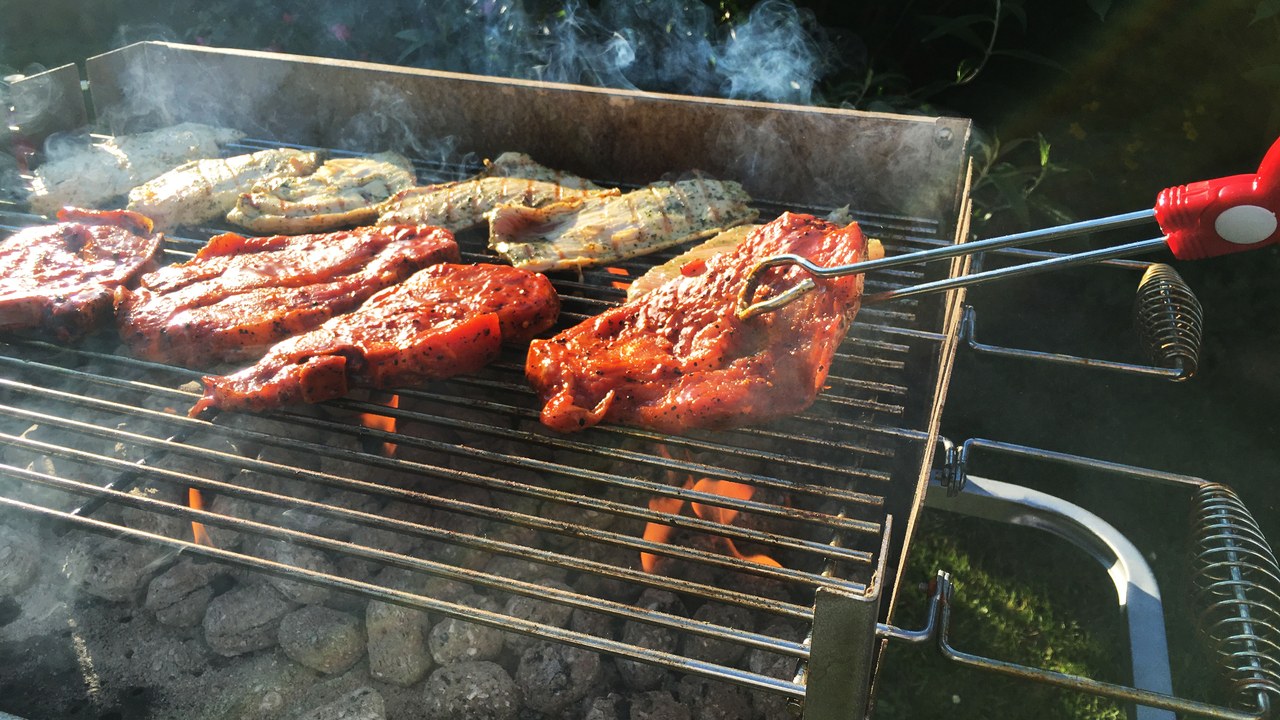
"Picture the collagen fibers in your skin and blood vessels as elastic rubber bands. When exposed to high dry heat, free sugars bind tightly to proteins, much like boiling sugar into hard, brittle caramel. These sugar molecules act like molecular glue, welding the elastic bands together and turning supple tissues into stiff, fragile plastic."
Molecular Pathway Flowchart
High Dry Heat Cooking / Elevated Blood Glucose
Non-Enzymatic Glycation
Accumulation of AGEs
RAGE Receptor Activation & Collagen Cross-Linking
Accelerated Wrinkling & Arterial Stiffness
Biological Mechanism: Uncontrolled Glycation and the Molecular Trap of AGEs
To understand why charred foods accelerate biological aging, we must distinguish between two fundamental processes: Glycosylation (an enzyme-controlled, precise attachment of sugars) and Glycation (an uncontrolled, non-enzymatic reaction). In a healthy body, glycosylation is essential for proper protein function. Non-enzymatic glycation, however, is a destructive cellular event. When excess free sugars encounter protein chains under high heat or prolonged exposure, they spontaneously bind to amino acid residues (particularly Lysine and Arginine).
This cascade originates from the Maillard reaction, generating intermediate Amadori products that undergo complex oxidative transformations into irreversible compounds known as Advanced Glycation End-products (AGEs). In daily life, you observe this when browning butter or caramelizing sugar. Within the human body, AGEs act as toxic molecular glue.
Collagen and elastin fibers - the core structural components of the Extracellular Matrix (ECM) keeping skin firm and vessels elastic - possess remarkably long half-lives (ranging from years to decades). Due to their longevity, they become primary targets for AGE modification. AGE-induced cross-linking robs these fibers of their natural elasticity. Consequently, skin fails to spring back from creases, while vascular walls lose their capacity to dilate properly for blood pressure regulation.
Decoding the Scientific Truth: Comparing AGE Levels Across Cooking Methods and Their Physiological Impact
A common misconception is that internal glycation stems solely from high dietary sugar intake. However, landmark nutritional toxicology studies from Mount Sinai Icahn School of Medicine have shown that dietary AGEs (dAGEs) absorbed through the gastrointestinal tract contribute significantly to the body's total AGE pool. The way you prepare your meals directly dictates the daily burden of dAGEs entering your circulation.
When foods rich in protein and fat (such as beef, pork, or poultry) are subjected to high dry heat (grilling, roasting, frying), dAGE concentrations can surge by 10 to 100 times compared to boiling or steaming in water.
The following markdown table contrasts AGE generation and physiological consequences across common culinary techniques:
| Culinary Method | Temperature & Environment | dAGE Accumulation Level | Impact on Skin & Blood Vessels |
|---|---|---|---|
| Boiling / Steaming / Poaching | 90 - 100°C (Moist heat) | Very Low (Baseline) | Preserves Collagen matrix, minimizes arterial wall inflammation |
| Pan-Searing / Roasting | 180 - 220°C (Dry heat with fat) | High (5 - 10x increase) | Accelerates Collagen cross-linking, promotes skin dullness |
| Charcoal Grilling / Deep-Frying | > 250°C (Dry heat, charred) | Extremely High (20 - 100x) | Strongly activates RAGE receptors, triggering chronic inflammation and deep wrinkles |
Once dAGEs enter the bloodstream, they bind to specific cell-surface receptors termed RAGE (Receptor for Advanced Glycation End-products). The RAGE-AGE engagement triggers an intracellular inflammatory cascade, unleashing Reactive Oxygen Species (ROS) and turning on the NF-kB transcription factor. This axis drives low-grade chronic inflammation, mitochondrial impairment, and pushes skin cells rapidly into cellular senescence.
Practical Strategies and Clinical Advice: Smart Culinary Tactics to Protect Your Extracellular Matrix
Preventing glycation damage does not require abandoning grilled flavors entirely; rather, it demands smarter culinary techniques to suppress AGE formation while retaining culinary pleasure. Dr. Hoang Xuan Chien recommends four actionable lifestyle strategies:
-
Acidify foods before exposure to heat: This simple habit relies on sound biochemistry. Marinate meats or fish in acidic liquids such as lemon juice, apple cider vinegar, or tomato sauce for at least 30 minutes prior to cooking. The low pH environment, combined with natural organic acids, inhibits the Maillard reaction, reducing AGE formation by up to 50% even during grilling.
-
Prioritize moist-heat and low-temperature cooking: Transition from high-temperature charring toward poaching, steaming, or sous-vide methods. Keeping cooking temperatures below 100°C in the presence of water effectively halts the cross-linking between sugar and protein molecules.
-
Infuse dishes with Polyphenol-rich herbs: Generously use herbs like thyme, cinnamon, turmeric, green tea extracts, and rosemary in your marinades. These natural polyphenols act as molecular shields, scavenging reactive oxygen species and trapping reactive dicarbonyl intermediates before they form permanent AGEs.
-
Optimize post-meal physical movement: A brisk 10 to 15-minute walk following meals prompts skeletal muscle to rapidly uptake circulating glucose, flattening postprandial blood sugar spikes. By curbing free glucose levels in plasma, spontaneous glycation within arterial walls is curtailed at its source.
Putting it into practice — safely
What you can do
- Marinate meat or fish in lemon juice or vinegar for at least 30 minutes before grilling.
- Prioritize boiling, steaming, or poaching foods at temperatures under 100°C.
- Take a light 10 to 15-minute walk after meals to reduce postprandial glucose spikes.
When to talk to a doctor
Consult a physician if you notice rising systolic blood pressure paired with signs of arterial stiffness or poor wound healing.