
Following an intense outdoor run or strenuous physical labor under the summer sun, our instinct is to grab a massive bottle of chilled, purified water and chug it down. Yet within twenty minutes, runners frequently experience a paradoxical fatigue: throbbing headaches, nausea, muscle cramps, and profound sluggishness.
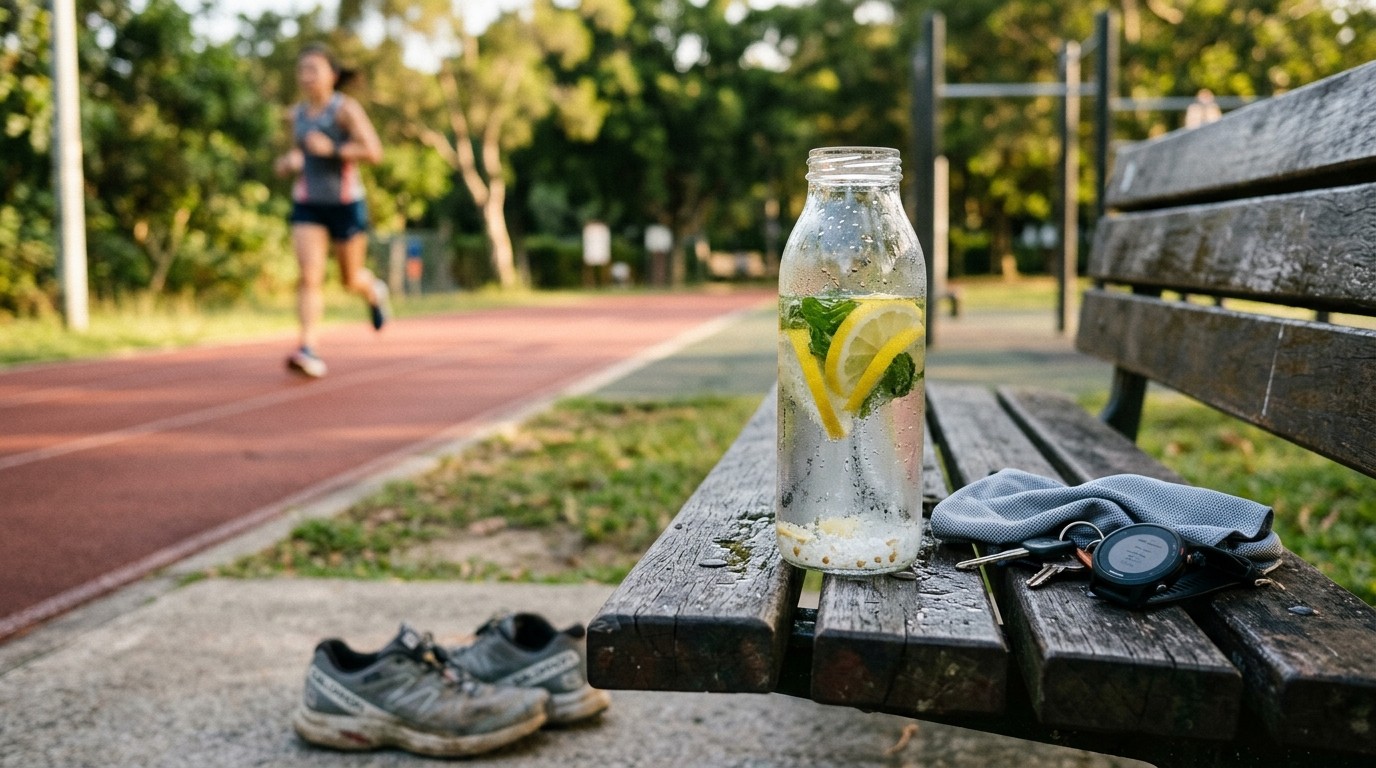
"Your cells behave like delicate water balloons suspended in a saline bath; flooding the outer fluid with pure fresh water forces water inward until the balloons stretch and strain."
Biological pathway reaction sequence:
│ Copious pure water intake
Dilution of extracellular fluid sodium │
│ Extracellular osmolarity plunges
Water flows intracellularly │
│ SGLT1 co-transporters in enterocytes
Rapid osmotic fluid assimilation│
│ Plasma volume preservation
Cardiac output maintained, cramps avoided │
1. The Biophysical Mechanism: Osmotic Swelling and Hyponatremia
Human sweat is not distilled water; it is a hypotonic saline solution rich in Sodium (Na+), alongside Chloride, Potassium, and Magnesium. During heavy exertion, the body sustains simultaneous losses of both solvent (water) and solutes (electrolytes).
If you replenish this deficit by rapidly chugging voluminous amounts of zero-mineral purified water: This influx quickly enters the vascular space without electrolytes, acutely diluting plasma Sodium concentrations below the critical physiological threshold (< 135 mmol/L). This condition is clinically defined as Exercise-Associated Hyponatremia (EAH).
By fundamental laws of osmosis, water migrates down its concentration gradient from hypotonic extracellular fluid into hypertonic intracellular compartments. Skeletal myocytes and cerebral neurons swell with excess water, manifesting as headaches, acute nausea, and profound muscular lethargy.
2. The Sodium-Potassium Pump: When Cellular Batteries Drain
Every muscular contraction, cardiac rhythm, and neural action potential relies upon the electrochemical resting potential maintained by the Na+/K+-ATPase Pump.
When extracellular Sodium dips precipitously:
- Membrane depolarization becomes erratic; muscle fibers fail to repolarize cleanly, producing involuntary, painful muscle spasms (cramps).
- Vascular circulating volume destabilizes because Sodium acts as the primary osmotic anchor retaining fluid inside the intravascular lumen.
| Rehydration Protocol | Plasma Sodium Status | Cellular Morphology | Physical Sensation |
|---|---|---|---|
| Massive Plain Water (> 1.5L flush) | Hypotonic dilution (< 135 mEq/L) | Intracellular edema (swelling) | Throbbing headache, nausea, weakness |
| Isotonic Electrolyte Fluid | Maintained within norm (138-142 mEq/L) | Pristine isotonic equilibrium | Rapid stamina restoration, zero cramps |
| High-Sugar Commercial Soda | Provokes insulin & osmotic drag | Delayed gastric emptying | Abdominal sloshing, persistent thirst |
3. Actionable Hydration Guidelines from Sports Medicine Consensuses
The American College of Sports Medicine (ACSM) and the Wilderness Medical Society establish clear rehydration tenets:
- Sip rhythmically rather than chugging: Consume 150 to 200 ml every 15 to 20 minutes during prolonged exertion. Slow ingestion optimizes intestinal transport without overwhelming renal diluting capacity.
- Simple artisanal electrolyte formulation: In the absence of clinical oral rehydration salts (ORS), dissolve 1/4 teaspoon of natural sea salt and a squeeze of fresh lemon into 500 ml of water with a dash of raw honey. This creates an optimal sodium-glucose cotransport solution.
- Monitor urine coloration: Pale straw-colored urine indicates pristine hydration equilibrium. Completely clear, colorless urine is a clinical red flag of over-hydration and mineral wash-out.
The Doctor's Reflection: Trusting Thirst Over Dogmatic Volume Targets
The ubiquitous recommendation to consume massive arbitrary fluid quotas often leads to mechanical overhydration. In sports medicine and emergency wards, life-threatening complications during marathons routinely arise not from dehydration, but from acute hyponatremia driven by aggressive plain water intake.
Human physiology possesses a remarkably calibrated osmoregulatory center in the hypothalamus. Drink primarily to quench physiological thirst rather than rigid schedules. Remember that internal fluids reflect a saline biological ocean; when heavy perspiration strips minerals, pairing fluid with modest sodium ensures cellular hydration, protecting cardiac output and neurological integrity.
Official Scientific Guidelines & Peer-Reviewed References
- Statement of the 3rd International Exercise-Associated Hyponatremia Consensus Development Conference, Carlsbad, California, 2015: DOI: 10.1136/bjsports-2015-095004 · PMID: 26227507. Definitive clinical guidelines establishing that overdrinking hypotonic fluids without sodium during prolonged endurance exercise carries the risk of life-threatening Exercise-Associated Hyponatremia (EAH).
- American College of Sports Medicine position stand. Exercise and fluid replacement: DOI: 10.1249/mss.0b013e31802ca597 · PMID: 17277604. ACSM official clinical guidelines recommending 0.5-0.7 g/L sodium and carbohydrate-electrolyte replacement solutions during prolonged exertion exceeding 1 hour.