
For greater than 99.9% of hominid evolutionary history, our biology was immersed in continuous sensory dialogue with terrestrial ecosystems: verdant forest canopies, open savannas, and flowing freshwater. Within a few industrial centuries, humanity sequestered its physiology inside rigid concrete monoliths, saturated by vehicular dissonance, synthetic photons, and endless digital notifications. This sensory rupture drives a documented modern pathology: Nature Deficit Disorder. Landmark clinical trials from the University of Michigan and Nippon Medical School demonstrate that a twenty-minute therapeutic nature immersion - the "Nature Pill" - acts as an instantaneous endocrine reset, dramatically purging salivary cortisol and boosting innate anti-viral immunity.
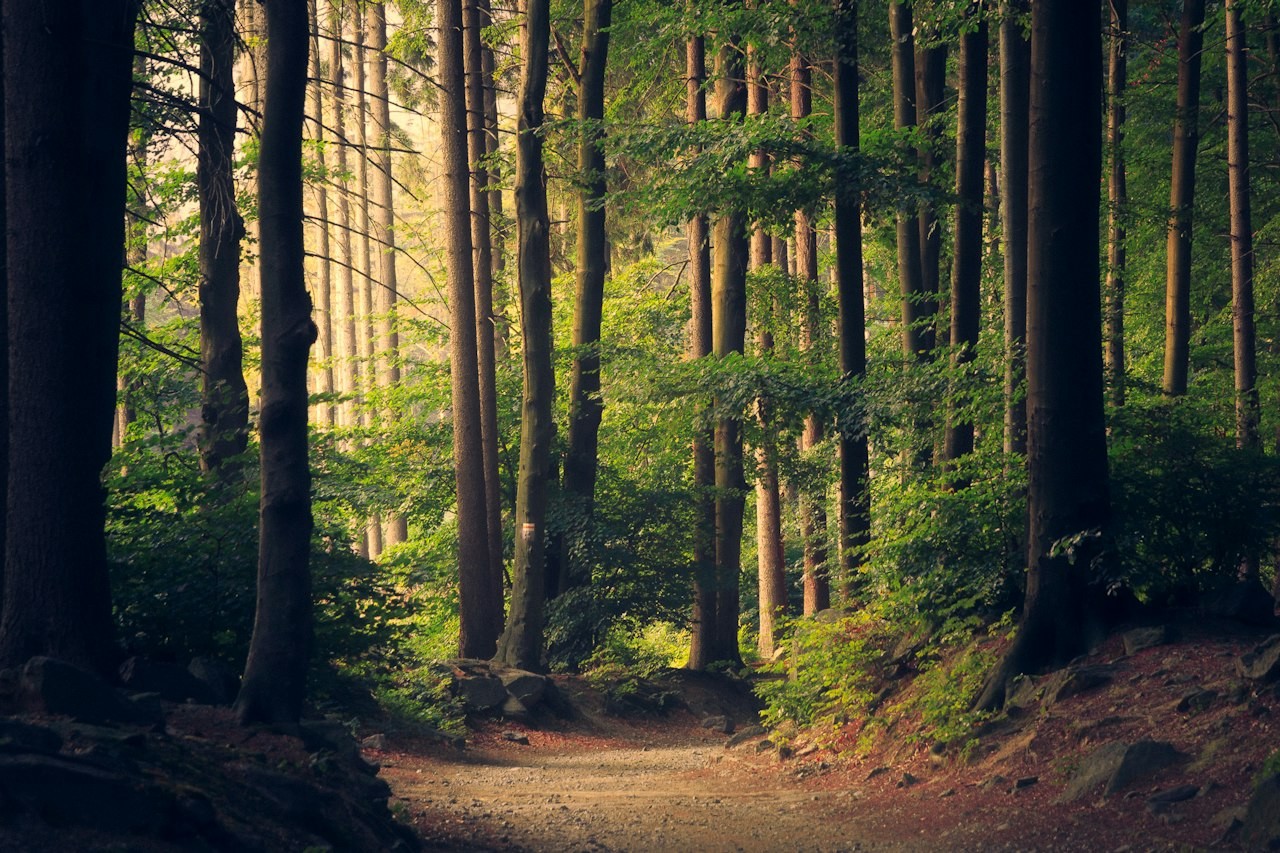
"Immersing yourself in a canopy of trees operates as an emergency thermal discharge for an overheating neural server; salivary cortisol clears rapidly, sympathetic firing ceases, and NK cells surge."
Biological Reaction Pathway Map:
│ Continuous high-frequency sensory noise
Amygdalar hypervigilance │
│ Chronic HPA axis activation
Cortisol surge
Suppression of NK cells│
Clinical Summary: Forest Immersion & Neuroendocrine Endpoints
| Study & Design | Cohort & Setting | Experimental Protocol | Quantitative Biomarkers & p-value | Preventive Medical Takeaway |
|---|---|---|---|---|
| Hunter et al. (Front Psychol 2019) - Prospective Nature Pill Trial | 36 urban adults tested thrice weekly for 8 weeks | 20 to 30-minute immersive nature sessions in urban green space | Salivary cortisol drop accelerated by 21.3%/hour (p < 0.001); Alpha-amylase plummeted | Identifies the precise 20- to 30-minute window for maximal endocrine stress clearance. |
| Twohig-Bennett et al. (Env Res 2018) - Massive Umbrella Meta-Analysis | >290 million subjects across 143 global studies | Proximity to and duration spent within green infrastructure | Diastolic BP declined; incidence of type 2 diabetes and stroke dropped (p < 0.0001) | Establishes access to biodiverse greenspace as a premier structural health intervention. |
| Li et al. (Int J Immunopathol) - Shinrin-Yoku Immunology Cohort | Healthy working males on a 3-day forest retreat | Daily quiet forest walks with exposure to pine Phytoncides | Natural Killer (NK) cell cytotoxicity surged by 50% (p < 0.01), persisting for 30 days | Volatile plant terpenes provide sustained anti-viral and anti-tumor immunosurveillance. |
1. Neuroendocrinology: HPA Axis Quelling and Cortisol Clearance Acceleration
Urban environments subject human cognition to unrelenting "directed attention" - the active cognitive suppression of distracting background noise, traffic dangers, and peripheral advertisements. This constant cognitive filtering hyper-stimulates the amygdala, driving the hypothalamic secretion of corticotropin-releasing hormone (CRH), triggering pituitary ACTH release, and drowning tissues in systemic Cortisol.
In Dr. MaryCarol Hunter's pivotal clinical trial at the University of Michigan, investigators tracked saliva biomarkers before and after subjects experienced natural park settings:
- Nature provides the sensory antidote: "soft fascination" - the effortless, non-taxing visual tracking of swaying leaves, dappled sunlight, and flowing water that engages subcortical sensory circuits while granting the prefrontal cortex profound restorative rest.
- With the prefrontal cortex relieved of executive demands, amygdalar threat alarms disengage. Salivary cortisol clearance accelerates by an astounding 21.3% per hour, returning hyper-aroused neuroendocrine profiles to baseline physiological equilibrium without pharmacological sedatives.
2. Airborne Phytoncides and the Upregulation of Natural Killer (NK) Cells
The discipline of Forest Bathing (Shinrin-yoku - 森林浴), inaugurated by the Japanese Ministry of Agriculture, Forestry, and Fisheries in 1982, represents an evidence-based biophysical intervention rather than romantic mysticism. Walking amidst dense forest foliage exposes human pulmonary membranes to aerosolized plant defense molecules termed Phytoncides.
Phytoncides are volatile antimicrobial organic compounds (principally monoterpenes and sesquiterpenes, including alpha-pinene, beta-pinene, and D-limonene) synthesized by ancient trees to deter insect infestation and fungal pathogens:
- Groundbreaking immunological trials directed by Professor Qing Li at Nippon Medical School demonstrated that inhaled phytoncides stimulate human bone marrow to accelerate the proliferation and cytotoxic vigor of Natural Killer (NK) cells.
- NK cells represent the primary vanguard of innate immunity, identifying and destroying virus-infected cells and occult malignant clones. Intracellular expression of cytotoxic effector proteins - specifically Perforin, Granulysin, and Granzymes A/B - surged by 40% to 50% following immersive forest walks, maintaining heightened immunosurveillance for up to thirty days.
3. Visual Fractals and Cortical Alpha Wave Resonance
Beyond aerosolized aromatic compounds, the visual architecture of wilderness delivers profound neurological decompression:
- Unlike the sterile right angles, rigid planar surfaces, and repetitive grids characteristic of modern urban architecture, botanical structures - canopies, branching fern fronds, and river deltas - exhibit self-repeating Fractal Geometry with a statistical fractal dimension (D) between 1.3 and 1.5.
- Biophysical investigations directed by Professor Richard Taylor at the University of Oregon using continuous electroencephalography (EEG) reveal that observing natural fractal geometries triggers an immediate shift into high-amplitude cortical Alpha Waves (8 to 12 Hz). This synchronized oscillatory state characterizes serene, awake mindfulness, instantaneously quenching prefrontal mental distress.
4. Actionable Protocol: Administering the Clinical 'Nature Pill'
Reaping profound psychoneuroimmunological benefits does not require an arduous pilgrimage to distant subalpine wilderness. You can seamlessly administer your "Nature Pill" in urban parks via this four-step prescription:
- The 20- to 30-Minute Efficiency Window: The University of Michigan clinical trial established that the steepest marginal rate of cortisol reduction occurs between minutes 20 and 30. Immersion beyond 30 minutes continues to confer benefits, but at a modest rate. A 20-minute pause in any urban park delivers optimal biological returns.
- The 'Three Negatives' Rule:
- Zero smartphone interactions (place device into airplane mode).
- Zero headphone listening; invite the tympanic membrane to register ambient avian calls and wind rustling through foliage.
- Zero aerobic exhaustion; this is not a cardio running workout. Amble unhurriedly or sit quietly upon a rustic bench.
- Multi-Sensory Immersion: Deliberately engage all sensory pathways. Touch rough tree bark, inhale the rich damp scent of soil geosmin, observe dappled light dancing on leaf veins, and feel ambient breezes across your skin.
- Target Frequency: Thrice Weekly: Schedule three dedicated 20-minute nature retreats per week during mornings or lunch breaks to sustain basal autonomic and immune resilience.
Physician's Perspective: Returning to the Ancient Green Sanctuary of Life
Modern humans take immense pride in claiming high-rise penthouses or metropolitan estates as our "homes." Yet viewed across the millions of years written into our cellular genome, the living botanical wilderness remains our true primal sanctuary - the cradle that nourished our physiology since the dawn of time.
Whenever you cross the threshold into a forest canopy or rest beneath a park tree, your pulse decelerates not through esoteric magic, but because your cells recognize they have finally returned home. The trees impose no deadlines, demand no performance metrics, and ping no urgent notifications. Grant yourself the grace of immersing within nature's sublime stillness for twenty minutes; you will unearth a sanctuary of peace that concrete can never provide.
References and Official Clinical Guidelines
- Urban Nature Experiences Reduce Stress in the Context of Daily Life: A Prospective Biomarker Trial: DOI: 10.3389/fpsyg.2019.00722 · PMID: 31019479. Prospective clinical biomarker study demonstrating that a 20- to 30-minute nature experience reliably maximizes salivary cortisol clearance by 21.3% per hour.
- The health benefits of the great outdoors: A systematic review and meta-analysis of greenspace exposure and health outcomes: DOI: 10.1016/j.envres.2018.06.030 · PMID: 29982151. Comprehensive meta-analysis spanning over 290 million subjects confirming that regular green space exposure drives statistically significant reductions in diastolic blood pressure, heart rate, and cortisol.