
Culinary culture celebrates piping hot, freshly steamed rice straight from the cooker, while cold leftover grains are often dismissed as stale scraps. Yet food biochemistry and microbiome research have unveiled a counter-intuitive reality: cooked starch cooled in the refrigerator undergoes retrogradation, morphing into a functional prebiotic power-hub.
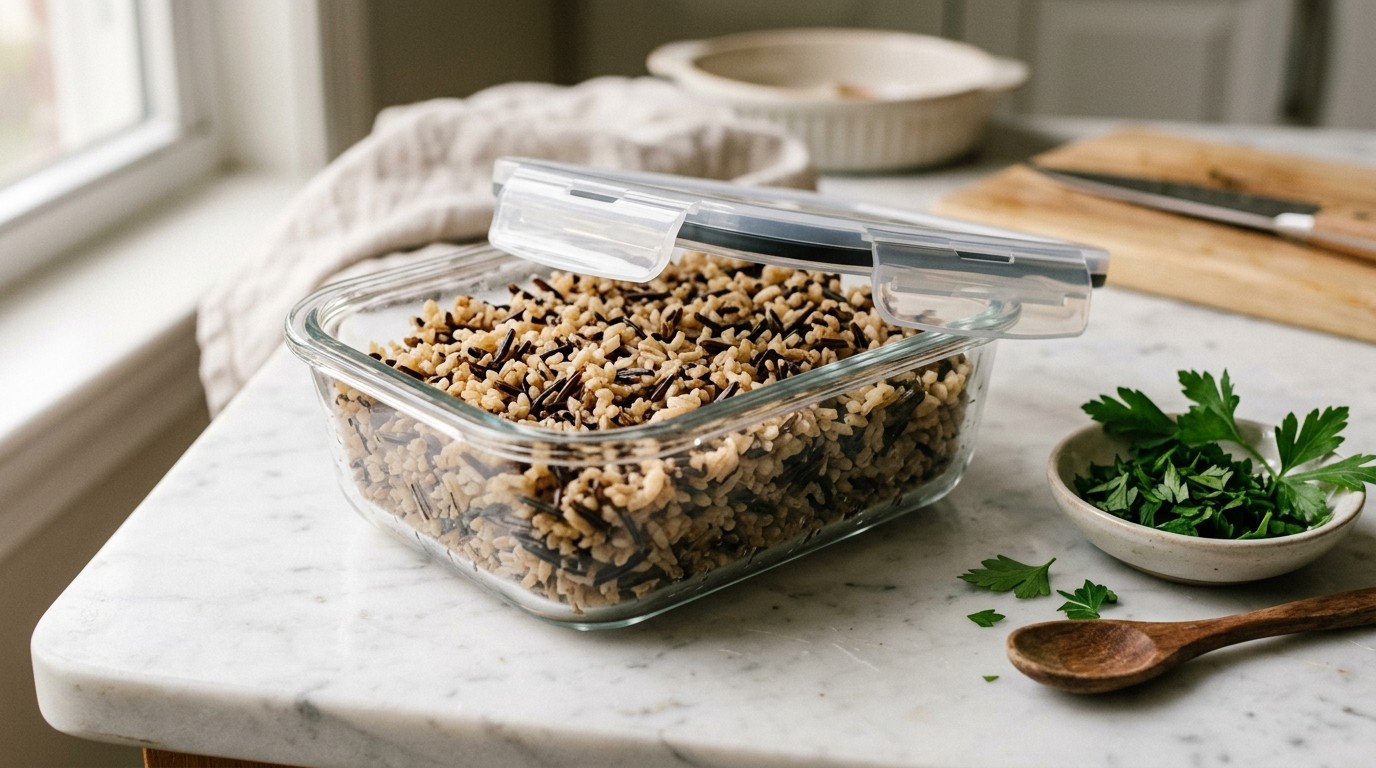
"Chilling cooked starch is like tying loose yarn into tightly coiled cryptographic knots; digestive enzymes fail to untangle them, allowing whole bundles to reach colon bacteria."
Biological pathway reaction sequence:
┌─────────────────────────────────────────────────────────────────────────────┐
│           STARCH RETROGRADATION KINETICS & MICROBIAL FERMENTATION           │
├─────────────────────────────────────────────────────────────────────────────┤
│ PHASE 1: GELATINIZATION & COOLING (RETROGRADATION PHENOMENON):              │
│ [Hot freshly cooked rice: Linear amylose chains uncoiled and accessible]    │
│               │                                                             │
│               ▼ (REFRIGERATION AT 4°C FOR 12-24 HOURS)                      │
│ [Amylose chains realign and recrystallize into tightly packed RS3 matrices] │
├─────────────────────────────────────────────────────────────────────────────┤
│ PHASE 2: RESISTANCE TO ENZYMATIC HYDROLYSIS & COLONIC FERMENTATION:         │
│ [RS3 traverses stomach and upper small intestine unscathed by amylase]      │
│               │                                                             │
│               ▼                                                             │
│ [Reaches the cecum and colon: Premium prebiotic fuel for Bifidobacteria]    │
│               │                                                             │
│               ▼                                                             │
│ [Bacterial fermentation generates Short-Chain Fatty Acids (Butyrate/Acetate)]│
│               │                                                             │
│               ▼                                                             │
│ [Accelerates hepatic fat clearance, fortifies gut barrier, stabilizes sugar]│
└─────────────────────────────────────────────────────────────────────────────┘
1. The Biophysical Mechanism: Starch Retrogradation
Raw starch granules in polished rice comprise two distinct polymers: branched Amylopectin and linear Amylose. When cooked in boiling water, hydrothermal gelatinization unfolds these chains into an amorphous, highly digestible matrix instantly targeted by digestive amylases.
However, when cooked starch cools in a refrigerator at 4°C for 12 to 24 hours: Dissolved linear amylose polymers realign, expelling hydration water and recrystallizing into dense, helical double-stranded microcrystalline bundles. This physicochemical transition is termed Starch Retrogradation, generating Resistant Starch Type 3 (RS3).
These crystalline structures physically resist enzymatic cleavage by pancreatic alpha-amylase and mucosal disaccharidases. They transit the entire small intestine completely intact without releasing free glucose, slashing postprandial glycemic excursions by nearly 50% and reducing net digestible calories.
2. Microbiome Fermentation: Unleashing Butyrate
Upon reaching the cecum and ascending colon: Resistant Starch RS3 serves as the premiere prebiotic feast for keystone symbionts such as Faecalibacterium prausnitzii and Roseburia. Anaerobic microbial fermentation converts these retrograded polymers into robust pools of Short-Chain Fatty Acids (SCFAs), dominated by the metabolic hero molecule Butyrate.
Butyrate supplies over 70% of the total baseline ATP energy consumed by colonocytes lining the colonic epithelium. It upregulates tight junction claudins and occludins, enhances mucosal barrier integrity, mitigates endotoxin leakage, and exerts profound epigenetic histone deacetylase (HDAC) inhibition against oncogenic inflammation.
| Starch Preparation | Small Intestinal Digestion Rate | Postprandial Glucose Surge | Colonic Butyrate Generation |
|---|---|---|---|
| Freshly Steamed Hot Rice | Immediate (Amorphous gelatinized) | Sharp hyperglycemic peak | Minimal (Absorbed high in gut) |
| Room-Temperature Rest (2 hrs) | Moderate | Moderate rise | Modest baseline production |
| Refrigerated 24h at 4°C | Resists enzymes (RS3 crystals) | Flattened rolling curve (-50%) | Plentiful surge (2-3x elevation) |
3. Actionable Culinary Protocol: Safe Reheating Without Losing Benefits
To extract maximal prebiotic resistant starch safely without foodborne microbial contamination, practice this evidence-based workflow:
- Refrigerate for at least 12 to 24 hours: Allow freshly cooked rice to cool briefly at room temperature for 20-30 minutes, then seal tightly and place in the refrigerator at 4°C.
- Reheat freely before serving: Crystalline RS3 is thermally stable; clinical data confirm that reheating chilled rice in a microwave or skillet does not destroy the retrograded crystal matrix. You enjoy warm comfort alongside prebiotic potency.
- Strict microbiological safety: Never leave cooked rice sitting at warm room temperature beyond 2 hours to prevent Bacillus cereus spore germination. Store sealed below 4°C and consume within 72 hours.
The Doctor's Reflection: Honoring Culinary Heritage Through Science
In Asian cultures, rice has sustained generations as the foundational staple of vitality. Yet modern reductionist dieting frequently vilifies starch as an inherent metabolic hazard. Biochemistry offers a nuanced, liberating perspective: through minor adjustments in preparation and cooling, ordinary rice undergoes structural reorganization into prebiotic fuel for trillions of symbiotic microbes.
You do not need to consume cold, unpalatable meals. Once retrograded starch (RS3) crystallizes in the refrigerator, gentle reheating preserves the tightly bound matrix. Savor your meal with peace of mind, knowing that you are nourishing both your systemic energy needs and your vital internal microbiome.
Official Scientific Guidelines & Peer-Reviewed References
- Resistant starch decreases intrahepatic triglycerides in patients with nonalcoholic fatty liver disease via gut microbiome alterations: DOI: 10.1016/j.cmet.2023.08.002 · PMID: 37673036. Resistant starch supplementation reshapes the human gut microbiota, significantly enriches Bifidobacterium, elevates circulating short-chain fatty acids, and markedly reduces intrahepatic fat accumulation.
- Hypoglycemic effect of recrystallized resistant starch on high-fat and high-fructose diet-induced type 2 diabetes mice: DOI: 10.1016/j.ijbiomac.2024.129812 · PMID: 38302033. Demonstrates the molecular structural basis of retrograded amylose (RS3) crystal formation upon cooling and its potent blunting of starch digestion enzymes.