
After enjoying a hearty dinner, the universal default is to collapse onto the couch or remain stationary in an office chair scrolling through social feeds. Many assure themselves they will compensate with a grueling morning gym session. Yet exercise physiologists have established that a gentle 10-minute stroll taken immediately after dining yields far greater glycemic protection than intense fasted workouts.
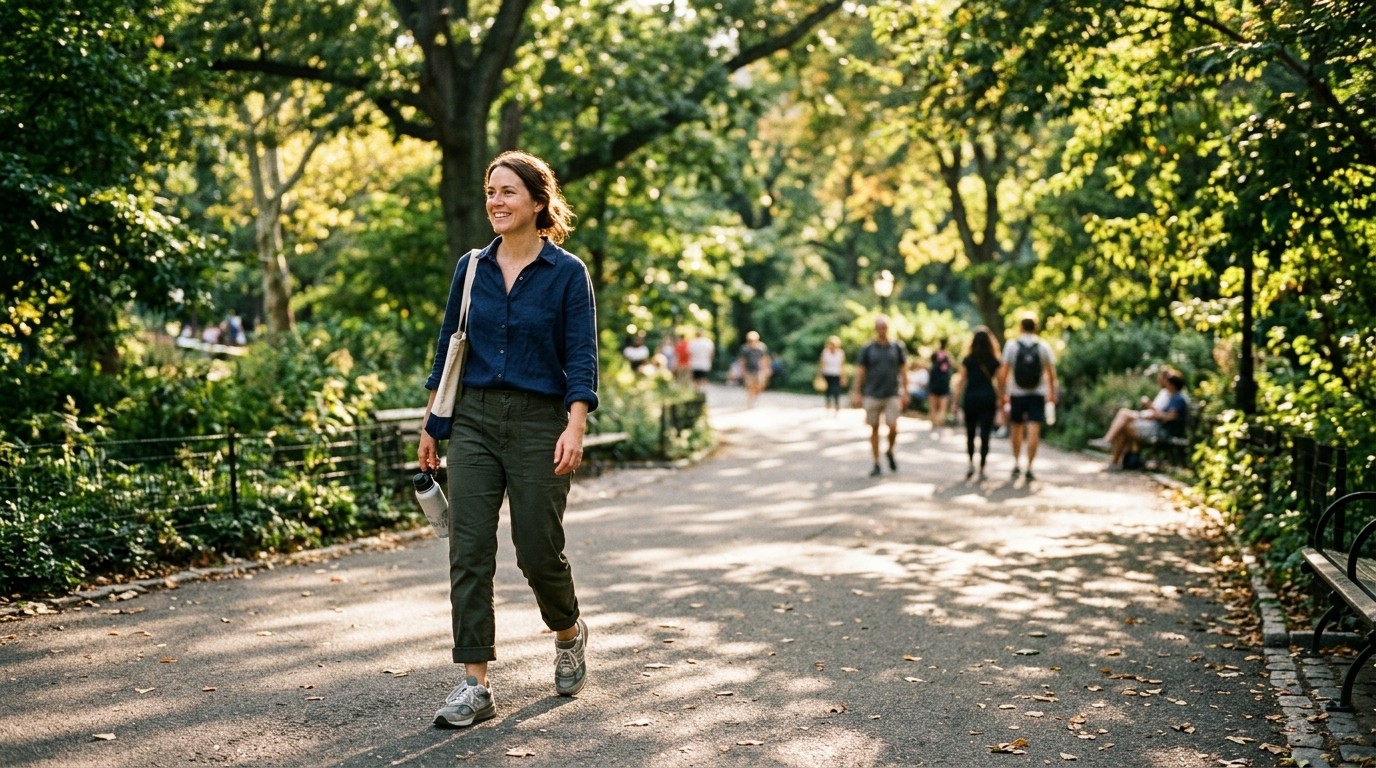
"Walking after dinner acts like opening an auxiliary irrigation channel right as a reservoir overflows; excess glucose drains directly into muscular soil without breaching vascular riverbanks."
Biological pathway reaction sequence:
│ Beta-cells forced to pump massive Insulin surges
Metabolic exhaustion│
│ Muscles vacuum glucose from circulation
Postprandial spike blunted 22%│
1. The Physiological Mechanism: Insulin-Independent Glucose Clearance
Under sedentary conditions, shuttling circulating glucose into skeletal myocytes is strictly dependent upon pancreatic Insulin docking onto surface receptors to unlock glucose gates. In sedentary, overweight, or prediabetic individuals, these receptors become desensitized (insulin resistance), stranding sugar in the bloodstream to inflict endothelial damage.
However, the moment you stand up and begin a gentle walk: The continuous mechanical contraction of major lower-limb muscle groups—the quadriceps, gluteals, and soleus—elevates cytosolic Calcium (Ca2+) flux and activates the metabolic regulator AMPK.
This mechanical stimulus directly prompts intracellular GLUT4 storage vesicles to translocate directly to the sarcolemmal surface: Your skeletal muscles morph into massive "glucose sinks" that hoover up circulating sugar COMPLETELY INDEPENDENT OF INSULIN. Nutrient glucose entering systemic circulation from the gut is immediately drawn into myocytes for low-grade oxidation or glycogen storage.
2. The 30-Minute Golden Window: Intercepting the Glycemic Wave
Postprandial hyperglycemia typically crests between 30 and 60 minutes following meal completion. Embarking on a brief stroll within this therapeutic window:
- Intercepts and flattens the glycemic surge before it inflicts vascular oxidative stress.
- Relieves pancreatic beta-cells of up to 50% of compensatory insulin secretion workload.
- Prevents excess circulating carbohydrates from being shuttled into hepatic and visceral fat accumulation.
| Postprandial Behavior | 45-Minute Glycemic Excursion | Pancreatic Insulin Output | Visceral Adiposity Risk |
|---|---|---|---|
| Sedentary Couch / Desk Resting | Acute jagged spike (> 150 mg/dL) | Massive compensatory output | Elevated visceral fat accumulation |
| Gentle 10-15 Min Stroll | Gentle rolling curve (< 115 mg/dL) | Blunted, rhythmic output (-35%) | Minimal (Glucose stored as muscle fuel) |
| Intense Heavy Lifting Right After | Gastrointestinal distress & reflux | Blood diverted away from gut | Indigestion, cramping, nausea |
3. Actionable Clinical Guidelines: The Mindful Stroll Protocol
To maximize glycemic optimization without precipitating indigestion or esophageal reflux, practice these three tenets:
- Pace gently, never run or strain: Maintain a relaxed conversational cadence (3 to 4 km/h). Avoid strenuous running or high-intensity interval training, which diverts splanchnic blood flow away from active digestion.
- Step out within 15 to 30 minutes: Do not wait two hours; initiating the stroll as postprandial glucose begins entering systemic circulation provides the precise timing needed to intercept the glycemic peak.
- Ten to fifteen minutes suffices: You do not need long, exhausting hikes. A brisk 10-minute loop after lunch and a 15-minute neighborhood stroll after dinner compounds into profound long-term HbA1c and vascular resilience.
The Doctor's Reflection: The Healing Grace of Unhurried Strides
Exercise is frequently misconstrued as an all-or-nothing ordeal requiring gym apparel, grueling exertion, and physical exhaustion. This intimidation barrier prevents millions from engaging in meaningful movement.
Metabolic biology reveals that gentle, unhurried habits often exert the most profound therapeutic impact. A 10-minute stroll following dinner is not an athletic chore; it is an effortless ritual of decompression, fresh air, and mindful companionship. Allow your feet to move at an easy pace, and your metabolism will reward you with boundless, stabilized vitality.
Official Scientific Guidelines & Peer-Reviewed References
- Advice to walk after meals is more effective for lowering postprandial glycaemia in type 2 diabetes mellitus than walking at other times: a randomized, crossover trial: DOI: 10.1007/s00125-016-4085-2 · PMID: 27747394. Walking for just 10 minutes immediately after each main meal was significantly more effective at lowering postprandial blood glucose (22% lower dinner spike) than a single 30-minute walk performed at any other time.
- Breaking Up Prolonged Sitting Reduces Postprandial Glucose and Insulin Responses: DOI: 10.2337/dc11-1931 · PMID: 22374636. Brief bouts of light walking activity after meals stimulate contraction-mediated GLUT4 translocation, dramatically reducing postprandial glucose and insulin requirements.