
Common wisdom suggests that a steaming hot shower before bed warms up the body for a cozy night. Yet thermoregulatory neurobiology reveals an astonishing paradox: human sleep initiation is biologically contingent upon dropping core body temperature, not heating it up.
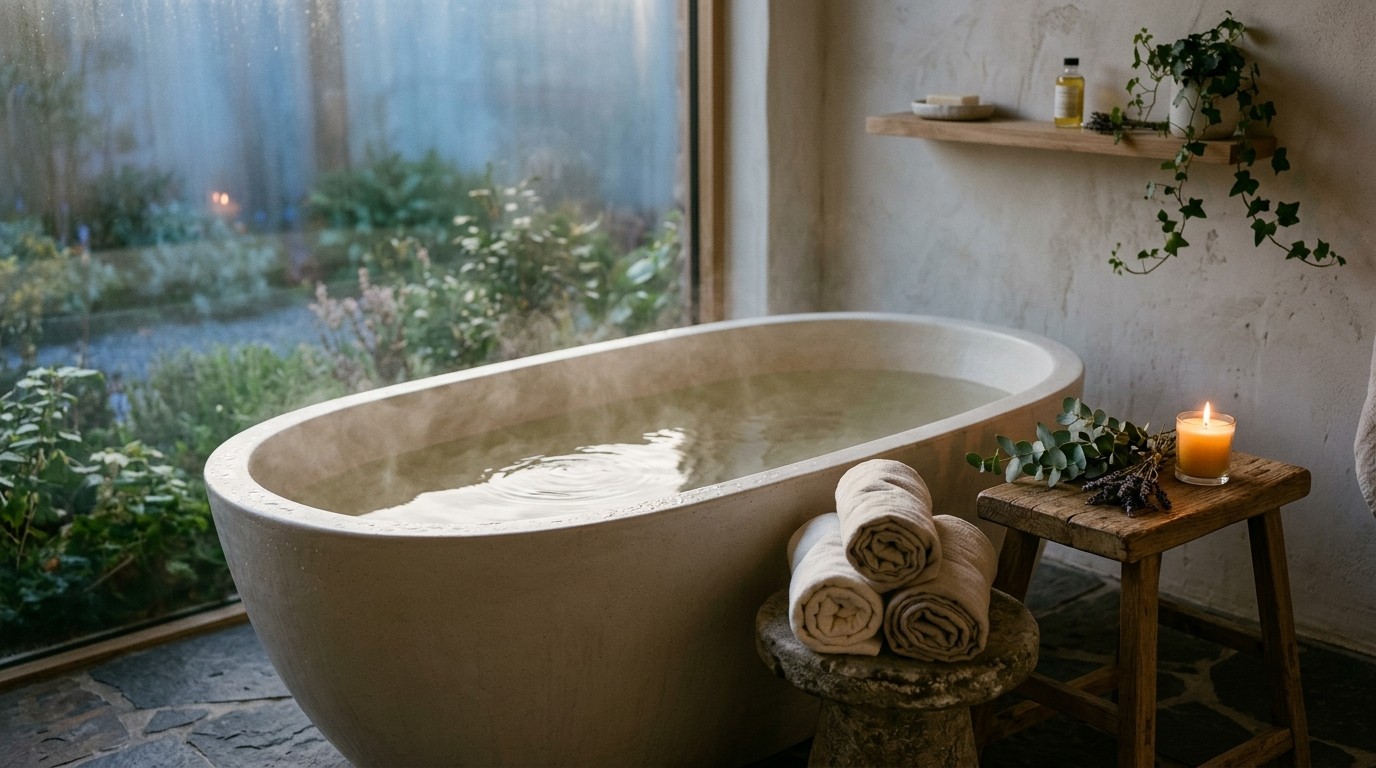
"A warm bath acts like opening all the upstairs thermal windows in a house; dumping heat through the roof cools down the entire living room within minutes."
Biological pathway reaction sequence:
│ Core body temperature drops steeply by 0.5-1.0°C
Somnogenic signal │
│ Sleep Onset Latency slashed by 36%
Augmentation of Slow-Wave Sleep │
1. The Physiological Paradox: The Biological Heat Sink
Human circadian rhythm is inextricably tethered to the core body temperature curve: During active daylight hours, core temperature remains elevated to sustain metabolic processing and cognitive vigilance. Around bedtime, core body temperature must plummet by roughly 0.5 to 1.0°C to trigger sleep-active neurons in the ventrolateral preoptic nucleus (VLPO).
When you submerge into a warm bath or shower at 40 to 42°C for 10 to 15 minutes: Thermal cutaneous receptors immediately stimulate parasympathetic pathways, driving massive vasodilation of specialized arteriovenous anastomoses in your palms, soles of the feet, and scalp.
These distal vascular beds operate as biological radiators. Warm arterial blood from internal thoracic organs is aggressively shuttled to the skin surface, radiating heat away into the cooler ambient environment. The moment you step out, core body temperature experiences a steep compensatory decline, flawlessly replicating the physiological drop that initiates natural slumber.
2. Systematic Meta-Analysis: The Warm-Bath Effect
A definitive systematic review and meta-analysis published in Sleep Medicine Reviews aggregating data across thousands of subjects established:
- Accelerated sleep onset latency: Warm bathing shortened the time required to fall asleep by an average of 10 minutes (a 36% improvement).
- Enriched slow-wave delta sleep architecture: Provides optimal systemic recovery and neural Glymphatic clearance.
- Superior subjective sleep depth: Relieves musculoskeletal spinal tension accumulated from sedentary computer work.
| Bathing Protocol & Timing | Core Thermoregulatory Impact | Sleep Latency Response | Restorative Architecture |
|---|---|---|---|
| Cold Shower Immediately Before Bed | Vasoconstriction traps internal core heat | Sympathetic spike, alertness surge | Delayed sleep onset, restlessness |
| Warm Bath < 30 Minutes Before Bed | Heat retention incomplete, sweating | Sensation of stifling bodily warmth | Superficial fragmented sleep |
| Warm Bath 90 Minutes Before Bed | Optimal distal heat dump, core cools | Effortless transition within 10 min | Maximized slow-wave NREM duration |
3. The Golden Rule of Three for Evening Hydrotherapy
To harness hydrotherapy as a natural, zero-side-effect sleep enhancer, adhere to this clinical consensus:
- Temperature at 40 to 42°C: Warm enough to trigger robust distal vasodilation without exceeding 43°C, which would spike heart rate and trigger sympathetic arousal.
- Duration of 10 to 15 minutes: Adequate duration for full vascular dilation without causing dehydration.
- The 90-minute bedtime window: Exactly enough time for core thermal dumping to reach its lowest circadian trough as your head touches the pillow.
The Doctor's Reflection: Cooling Down to Restore Inner Tranquility
Biology is replete with elegant paradoxes: to cool the internal core, one must deliberately swing open the peripheral windows. A warm bath serves as that physiological key, unlocking distal cutaneous blood flow to discharge somatic heat and psychological tension accumulated across the workday.
Never reduce evening preparations to a rushed chore. Regard 10 to 15 minutes of warm bathing as a sacred sanctuary separating the relentless demands of the outside world from your restful nocturnal chamber. The comforting cocoon of warm water, followed by the quiet drop in internal core temperature, is physiology’s most natural lullaby for deep, restorative sleep.
Official Scientific Guidelines & Peer-Reviewed References
- Before-bedtime passive body heating by warm shower or bath to improve sleep: A systematic review and meta-analysis: DOI: 10.1016/j.smrv.2019.04.008 · PMID: 31102877. Water-based passive body heating of 40-42.5°C for as little as 10 minutes scheduled 1-2 hours before bedtime significantly improves sleep onset latency and deep slow-wave sleep by triggering peripheral vasodilation.
- Warm feet promote the rapid onset of sleep: DOI: 10.1038/43366 · PMID: 10485703. Distal skin vasodilation and warming of the feet promote rapid redistribution of heat to the periphery, steepening the nocturnal drop in core body temperature and facilitating sleep onset.