
Many individuals struggling with expanding waistlines insist their daily calorie intake is moderate, yet they consistently dine past 8 or 9 PM due to demanding work schedules. Modern chronobiology demonstrates that a calorie is not merely a thermodynamic unit; timing dictates whether nutrients burn as fuel or deposit as visceral fat.
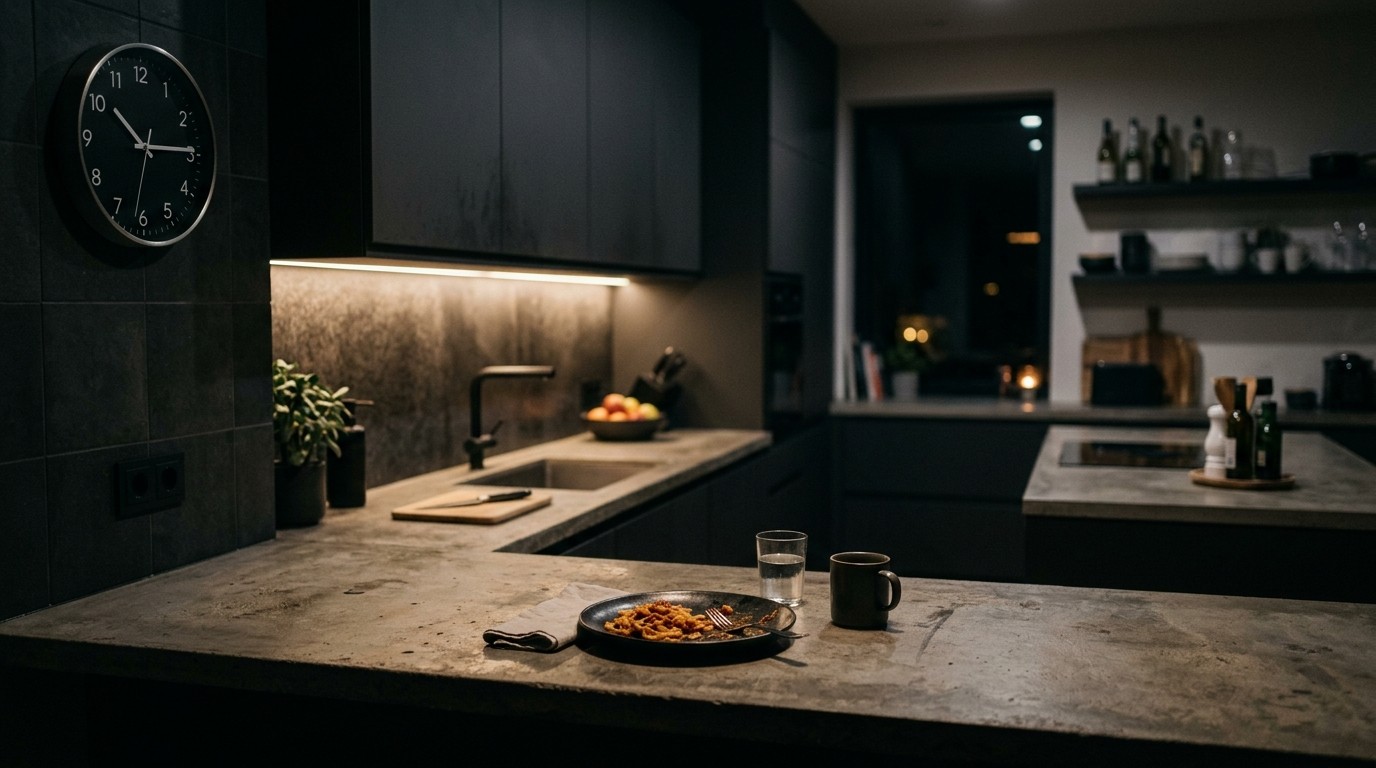
"Eating late at night is like delivering raw inventory to a factory after closing time; with assembly lines dormant, raw materials get abandoned in deep visceral storage lockers."
Biological pathway reaction sequence:
│ Solar zeitgeber
Suprachiasmatic nucleus (SCN) drives high metabolism │
│ Peak insulin sensitivity
Mitochondria direct substrates toward ATP │
│ Melatonin binds pancreatic MT1 receptors
Blunts insulin release 50% │
│ Substrates stall in bloodstream
Prolonged nocturnal hyperglycaemia │
│ Adipocyte PPAR-gamma expression triggered
Calories routed into VISCERAL FAT│
1. The Melatonin-Insulin Clash: When Two Biological Masters Collide
As dusk falls and ambient light diminishes, the pineal gland ramps up secretion of the master sleep hormone Melatonin. Crucially, pancreatic beta-cells express high-affinity Melatonin receptors (MT1 and MT2).
When Melatonin binds these receptors: It broadcasts an authoritative systemic command: "Closing time; shut down insulin secretion machinery!". If a carbohydrate- or lipid-heavy meal arrives under these circadian conditions, the pancreas responds sluggishly. Blood glucose cannot enter skeletal muscle myocytes due to deficient insulin gating.
Consequently, elevated glucose and free fatty acids linger in the bloodstream overnight, fostering endothelial inflammation and compelling the liver to re-esterify nutrients into visceral adipose stores.
2. Core Body Temperature Drop and Suppressed Lipolysis
A landmark clinical trial published in Cell Metabolism in 2022 carefully monitored isocaloric meal timing and identified three pivotal nocturnal disruptions:
First, nocturnal resting energy expenditure drops markedly; lower core body temperature burns roughly 10 to 15% fewer calories compared to daytime digestion. Second, circulating 24-hour satiety hormone Leptin decreases while hunger hormone Ghrelin spikes, explaining the compulsive craving for sweets late at night. Third, adipogenic gene expression in visceral adipose depots is dramatically upregulated twofold.
| Biomarker Parameter | Dinner Completed Before 7:30 PM | Dinner Consumed Past 8:30 PM | Long-Term Health Impact |
|---|---|---|---|
| Nocturnal Glycemia | Stable nocturnal baseline (75-85 mg/dL) | Sustained hyperglycemia for 4-6 hours | Accelerated insulin resistance & elevated HbA1c |
| Deep Sleep Architecture | Maximizes slow-wave delta sleep and GH | Disrupted sleep, nocturnal acid reflux | Morning brain fog and cognitive sluggishness |
| Nocturnal Lipolysis | Shifts smoothly into fat oxidation | Fat burning suppressed entirely | Progressive visceral and hepatic steatosis |
3. Actionable Clinical Strategies: The Golden Evening Protocol
To reclaim metabolic leanness and safeguard cardiovascular health without extreme dietary deprivation, adopt these evidence-based principles:
- Establish a 7:30 PM kitchen curfew: Finish dinner at least 3 to 4 hours before bedtime. This window allows complete gastric emptying before melatonin reaches peak amplitude.
- Smart rescue snacks for shift workers: If late shifts demand nighttime sustenance, strictly avoid refined carbs, noodles, or confectionery. Opt for plain warm water, a hard-boiled egg, or a handful of raw almonds (pure protein and fiber that will not provoke glucose spikes).
- Respect a 12-hour overnight digestive rest: Maintain at least 12 hours between dinner and the subsequent breakfast (e.g., 7:00 PM dinner to 7:00 AM breakfast). This window activates cellular autophagy and restores hepatic insulin sensitivity.
The Doctor's Reflection: Harmonizing With Your Internal Clock
In modern metropolitan life, late dinner is frequently the sole window for decompression, social connection, and intimacy after demanding work hours. Clinicians understand that demanding everyone consistently consume dinner before 7 PM is unrealistic and disconnected from human reality.
The clinical objective is not self-flagellation or obsessive rigidity. View your internal physiology with compassion: after 8 PM, your gastrointestinal organs, liver, and pancreatic beta-cells are transitioning into restorative maintenance mode. If your schedule forces a late intake, pivot toward gentle nourishment—a bowl of warm broth, light steamed protein, or crisp vegetables rather than dense carbohydrate loads. Granting your metabolic machinery room to cool before bedtime ensures you awaken with vitality rather than visceral heaviness.
Official Scientific Guidelines & Peer-Reviewed References
- Late isocaloric eating increases hunger, decreases energy expenditure, and alters adipose tissue gene expression in humans: DOI: 10.1016/j.cmet.2022.09.007 · PMID: 36198293. Eating 4 hours later while maintaining identical caloric intake increases wake-time hunger, decreases core body temperature and 24h energy expenditure, and shifts adipose tissue gene expression toward lipid storage (adipogenesis).
- When Rhythms Meet the Blues: Circadian Interactions with the Microbiota-Gut-Brain Axis: DOI: 10.1016/j.cmet.2020.02.008 · PMID: 32130879. Circadian misalignment from late-night nutrient intake impairs metabolic rhythms, desynchronizes peripheral clocks, and increases visceral adiposity.