In modern molecular biology, aging is no longer perceived as an unalterable stochastic breakdown. Contemporary biogerontology defines biological aging primarily as a cascade of intracellular signaling dysregulation.
Within every mammalian cell, four master biochemical communication hubs dictate cellular fate: deciding whether energy should be allocated toward rapid growth, cellular housekeeping (macroautophagy), endogenous antioxidant defense, or chronic inflammatory signaling.
These four pivotal molecular switches are: AMPK, Nrf2, mTOR, and NF-κB.
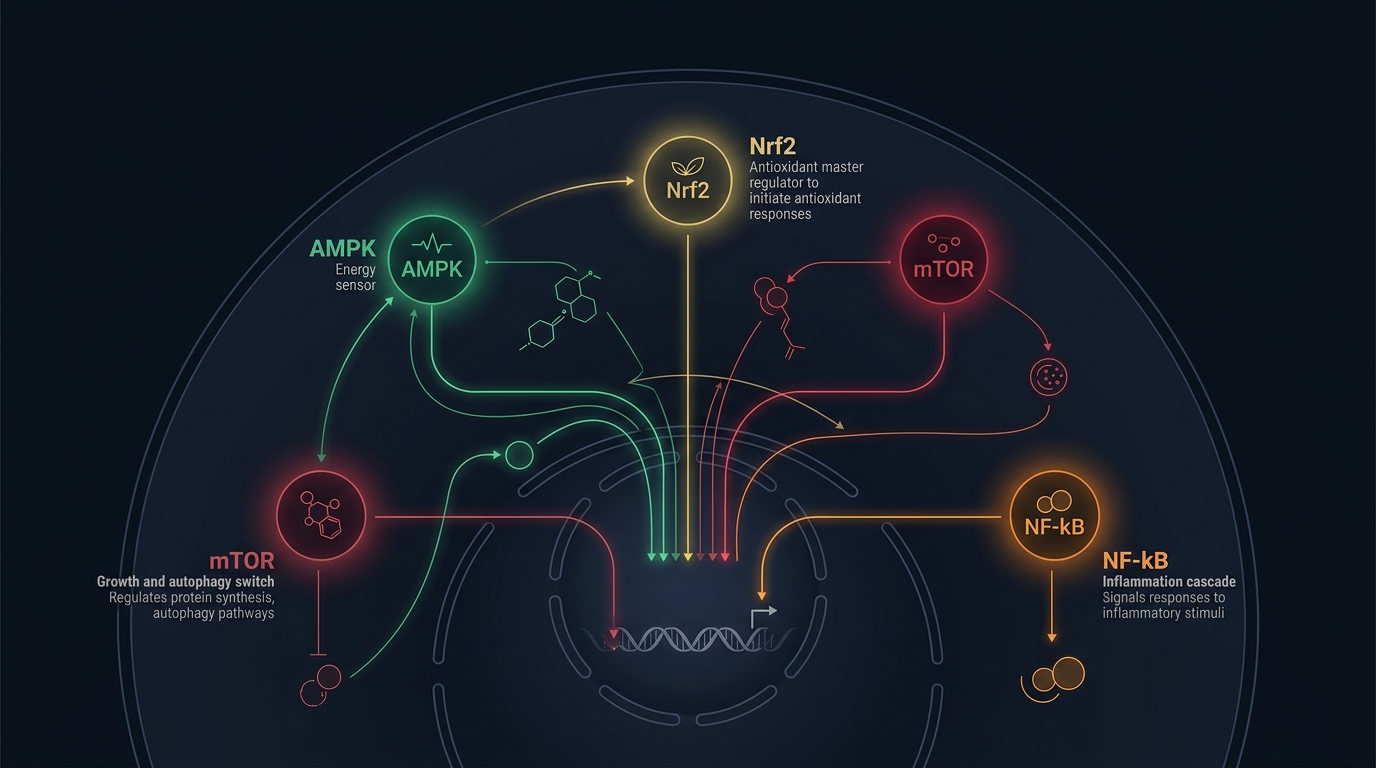
"A human cell operates very much like a high-performance sports car. mTOR represents the accelerator pedal driving forward velocity and mass accumulation; AMPK functions as the regenerative braking system preventing engine overheating; Nrf2 is the self-cleaning catalytic radiator neutralising exhaust toxins; while NF-κB acts as the emergency siren. If the accelerator remains floored while the siren wails unabated day and night, the vehicle suffers catastrophic mechanical failure."
1. The Four Biological Hubs and Their Target Bioactive Ligands
Nutrients & Bioactives
4 Cellular Sensing Nodes
Nuclear Translocation
Longevity vs Senescence
1. AMPK: The Cellular Energy Gauge (Activated by Berberine)
When intracellular energy is depleted (manifesting as an elevated AMP/ATP ratio), 5' AMP-activated protein kinase (AMPK) is phosphorylated. AMPK instructs the cell to halt anabolic lipid storage, enhances GLUT4 glucose uptake, stimulates mitochondrial biogenesis via PGC-1α, and initiates macroautophagy. The botanical isoquinoline alkaloid Berberine mimics caloric restriction, phosphorylating AMPK and restoring metabolic flexibility.
2. Nrf2: Master Regulator of Endogenous Cytoprotection (Activated by Sulforaphane)
Human cells do not depend solely on dietary vitamin C or E for redox homeostasis. When Nrf2 is released from its cytoplasmic inhibitor Keap1, it translocates into the nucleus, binding to the Antioxidant Response Element (ARE). This drives transcription of potent Phase II detoxification enzymes including Glutathione, Catalase, and Superoxide Dismutase (SOD). Sulforaphane, an isothiocyanate derived from broccoli sprouts, remains the most potent natural activator of this pathway identified to date.
3. mTOR: The Growth vs Autophagy Gatekeeper (Modulated by Quercetin)
When amino acids and growth factors abound, mechanistic target of rapamycin (mTORC1) upregulates ribosomal biogenesis and protein translation. However, constitutive hyperactivation of mTOR suppresses cellular quality control, fostering the accumulation of damaged organelles and senescent debris. The flavonoid Quercetin exerts gentle, reversible inhibition on mTOR signaling, restoring basal autophagic flux without toxicity.
4. NF-κB: The Pro-Inflammatory Master Switch (Quenched by Curcumin)
Nuclear factor kappa B (NF-κB) is the primary transcription factor driving pro-inflammatory cytokines such as TNF-α, IL-1β, and IL-6. During biological aging, low-grade systemic inflammation (inflammaging) degrades vascular integrity and neurocognitive function. Curcumin inhibits IκB kinase (IKK) phosphorylation, preventing NF-κB p65 nuclear translocation and extinguishing chronic micro-inflammation at its molecular root.
2. Clinical Synergy Matrix of the 4 Signaling Nodes
| Signaling Node | Targeted Therapeutic State | Botanical Bioactive Ligands | Measurable Biological Outcome |
|---|---|---|---|
| AMPK | Upregulated (ON) | Berberine, Metformin, Aerobic Exercise | Reduced hepatic steatosis, decreased HbA1c |
| Nrf2 | Upregulated (ON) | Sulforaphane, Green Tea EGCG | 2 to 3-fold elevation in intracellular Glutathione |
| mTOR | Periodically Modulated (Controlled) | Quercetin, Intermittent Fasting | Accelerated autophagic clearance of senescent proteins |
| NF-κB | Suppressed (OFF) | Curcuminoids, High-EPA Omega-3 | Significant reduction in hs-CRP and ESR |
3. Practical Protocols & Clinical Action Plan: The Art of Biological Pulsing
A frequent pitfall among longevity enthusiasts is attempting to simultaneously suppress mTOR and stimulate AMPK constantly, without allowing the body anabolic windows for tissue repair and muscular protein synthesis. The human body is not meant to exist in eternal austerity or perpetual feasting.
Longevity science emphasizes Biological Pulsing:
Protocol 1: The Catabolic Autophagy Window (Mornings)
- AMPK Induction: An overnight 14 to 16-hour fasting window paired with light aerobic movement switches cells from glucose utilization to mitochondrial beta-oxidation.
- Target Bioactives: When indicated, berberine (500 mg) taken before the largest carbohydrate-dense meal improves GLUT4 translocation without crashing fasting glucose.
Protocol 2: The Anabolic Regeneration Window (Post-Workout)
- Controlled mTOR Activation: Progressive resistance training followed by high-biological-value protein (25-30g containing 2.5-3g leucine) triggers physiological muscle protein synthesis. Chronic mTOR suppression risks sarcopenia, the primary driver of frailty in aging.
Protocol 3: The Evening Cytoprotection Window (Dinner & Night)
- Nrf2 & NF-κB Quenching: Broccoli sprouts or standardized sulforaphane glucosinolates taken alongside dietary lipids, coupled with curcuminoids, neutralize exercise-induced reactive oxygen species and dampen systemic nocturnal micro-inflammation.
Clinical Safety Caveats:
- Never combine pharmacological doses of berberine with prescription metformin or sulfonylureas without medical supervision, due to compounded hypoglycemia risks.
- High-dose botanical polyphenols must be cycled (e.g., 5 days on, 2 days off) to avoid desensitizing endogenous cellular antioxidant response elements.
Mastering this four-node regulatory circuit transforms cellular pharmacology into a proactive strategy for slowing intrinsic biological aging.