
Every single day inside a healthy adult body, tens of thousands of cells suffer genomic mutations caused by replication errors, metabolic byproducts, ionizing radiation, or oxidative free radicals. Yet the vast majority of human beings never develop clinical cancers.
Why does this fundamental paradox exist?
In 1889, English surgeon Stephen Paget proposed a visionary concept far ahead of his era: The Seed and Soil Hypothesis. A mutant cell (the seed), no matter how aberrant, will either be destroyed or forced into dormancy if it lands upon inhospitable ground endowed with robust immune surveillance and physiological oxygenation (poor soil).
Malignancy only erupts when the host tissue microenvironment degrades, transforming into fertile soil that nourishes and protects the rogue seed.
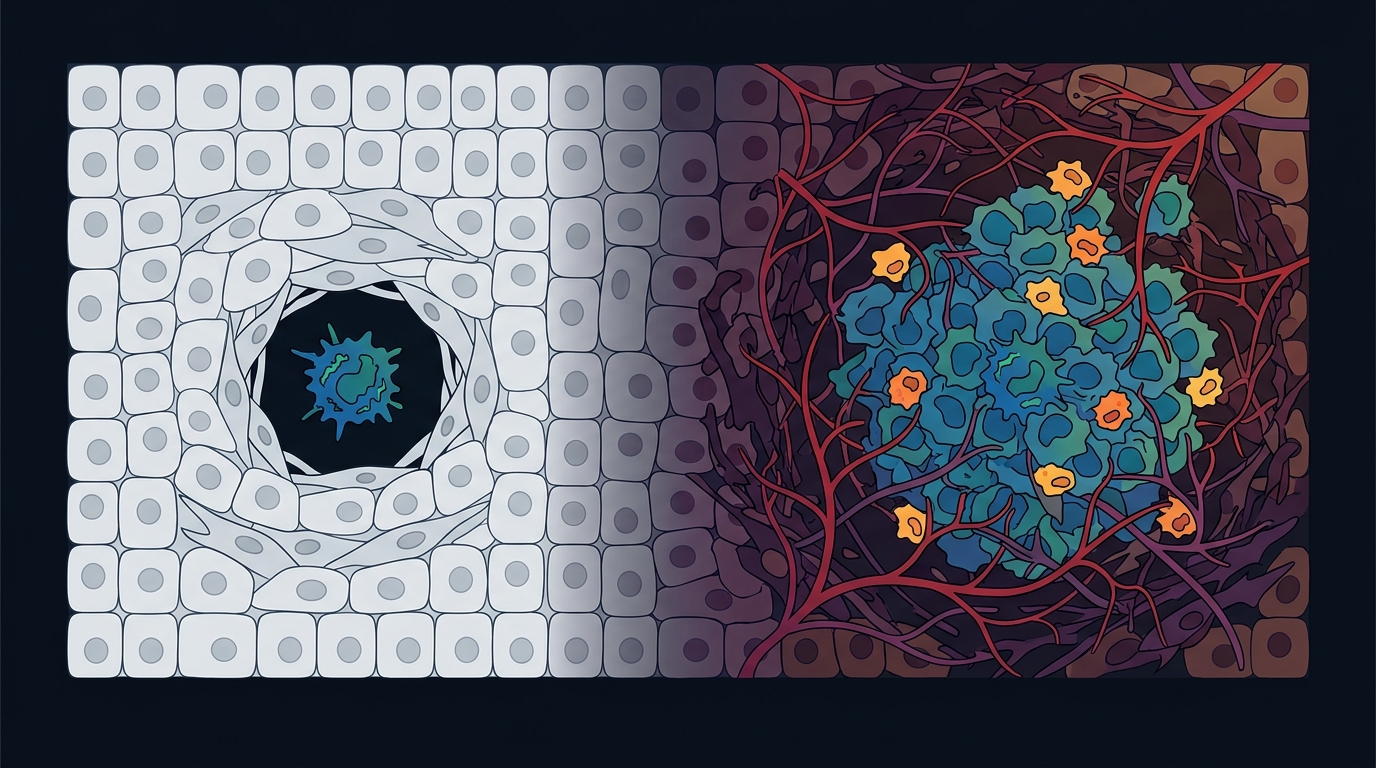
"Mutant cells resemble wild weed seeds carried by the breeze. If a weed seed lands upon a meticulously tended lawn with fertile soil, rich oxygen, and a diligent gardener (the immune system), the weed cannot establish deep roots. But if the garden is neglected, saturated with standing water, acid, and toxins (chronic low-grade inflammation, hypoxia), wild weeds can conquer the entire landscape almost overnight."
1. Four Hallmarks of Malignant Tumor Soil (The TME)
A tumor never expands as an isolated clump of rogue cells in an empty void. It systematically remodels adjacent tissue into a specialized ecosystem known as the Tumor Microenvironment (TME):
Healthy Tissue: pH 7.4, Normoxia
Chronic Low-Grade Inflammation & Angiogenesis
Tumor Soil: Hypoxic, Acidic, Immunosuppressed
- Local Tissue Hypoxia: Unregulated cell expansion rapidly outpaces microvascular supply, triggering the transcription factor HIF-1α. HIF-1α initiates emergency angiogenesis, sprouting chaotic, leaky blood vessels while directing tumor cells toward metastatic invasion routes.
- Interstitial Extracellular Acidification: Lactate exported via the Warburg effect increases local proton concentration. This acidic terrain neutralizes natural killer (NK) cells and cytotoxic CD8+ T lymphocytes, effectively blinding the adaptive immune response.
- Subversion of Macrophages (TAMs - M2 Polarization): Tumor cytokines reprogram patrolling immune sentinels, switching pro-inflammatory, tumor-killing M1 macrophages into subverted M2 tumor-associated macrophages (TAMs). These corrupted cells secrete Vascular Endothelial Growth Factor (VEGF), actively nourishing tumor clusters.
- Desmoplastic Stromal Fibrosis: Activated cancer-associated fibroblasts (CAFs) construct a dense, rigid collagen fortress around the tumor core, physically shielding malignant nests from chemotherapeutic agents and immune infiltration.
2. Paradigms in Cancer Care: Seed Eradication vs Soil Rehabilitation
| Evaluative Axis | Traditional Paradigm: Eradicate the "Seed" | Modern Metabolic Paradigm: Recondition the "Soil" |
|---|---|---|
| Primary Target | Direct destruction of DNA-mutated cancer cells | Remodeling the biochemical and physical host tissue landscape |
| Standard Modalities | Surgical resection, ionizing radiation, cytotoxic chemotherapy | Targeted immunotherapy, anti-angiogenesis, metabolic modulation |
| Primary Bottleneck | Drug resistance and recurrence if the soil remains fertile | Requires persistent, comprehensive metabolic and lifestyle alignment |
| Impact on Healthy Parenchyma | Significant toxicity against rapidly dividing normal cells | Preserves and enhances the physiological vitality of healthy tissues |
3. Actionable Protocols & Clinical Soil Rehabilitation Strategies
Understanding Paget's Soil paradigm reveals that cancer risk reduction is not merely waiting for a detectable tumor to appear before cutting it out. It is the proactive cultivation of a host biological terrain in which mutated rogue cells cannot gain traction:
Protocol 1: Quenching Chronic Subclinical Inflammation
- Visceral Adiposity & Endotoxemia: Lowering abdominal visceral fat reduces chronic secretion of pro-inflammatory cytokines (IL-6, TNF-alpha) and systemic lipopolysaccharide (LPS) leakage through the gut barrier.
- Bioactive Defense: Incorporating phytochemically active polyphenols (phytosomal curcumin, sulforaphane) quenches NF-kB signaling and prevents stromal fibroblasts from transforming into tumor-supportive CAFs.
Protocol 2: Breaking Hypoxic Niches via Aerobic Perfusion
- Microvascular Perfusion: Zone 2 cardiovascular exercise (150-180 minutes weekly) expands capillary network density and tissue partial pressure of oxygen (pO2), blunting hypoxia-inducible factor 1-alpha (HIF-1a) overexpression.
- Musculoskeletal Sinks: Resistance training creates an expansive metabolic sink for circulating glucose and insulin, reducing systemic growth factor signaling.
Protocol 3: Safeguarding Circadian and Immune Surveillance
- Nocturnal Melatonin Pulse: Complete darkness during sleep preserves the endogenous pineal melatonin peak, protecting bone marrow niches and fueling cytotoxic natural killer (NK) cell vigilance.
- Metabolic Rest Windows: A 12 to 14-hour overnight fasting window encourages physiological macroautophagy to clear damaged intracellular debris before malignant transformation can occur.
Clinical Safety Caveats:
- Lifestyle and metabolic soil optimization serve as foundational preventive and adjunctive biological support, but must never substitute for standard-of-care oncological therapy in patients diagnosed with active malignancy.
- Patients undergoing chemotherapy or radiotherapy should always consult their clinical oncologist before initiating high-dose antioxidant supplements, to prevent interference with therapeutic oxidative mechanisms.
When we transform the human body into barren soil for malignant cells, mutant seeds may land, but they will never find the conditions to take root.