
In recent years, leaky gut has evolved into a ubiquitous health buzzword, accompanied by a barrage of supplements, bone broths, and restrictive diets promising to cure all ailments. Within academic medicine, however, this concept was long met with skepticism and dismissed as an unproven hypothesis. This skepticism was shattered with the discovery of Zonulin, the only known physiological modulator of intercellular tight junctions. The overproduction of Zonulin, typically triggered by dietary gluten or gut dysbiosis, opens the floodgates between the intestinal lumen and the bloodstream. The consequence of this barrier failure extends far beyond transient bloating or abdominal discomfort: it leads to the continuous leakage of Lipopolysaccharide (LPS), a major structural component of Gram-negative bacterial outer membranes. The influx of LPS into the portal and systemic circulation establishes a state of silent, low-grade chronic inflammation, laying the groundwork for metabolic disorders that are often mistakenly attributed solely to genetics or sedentary lifestyles.
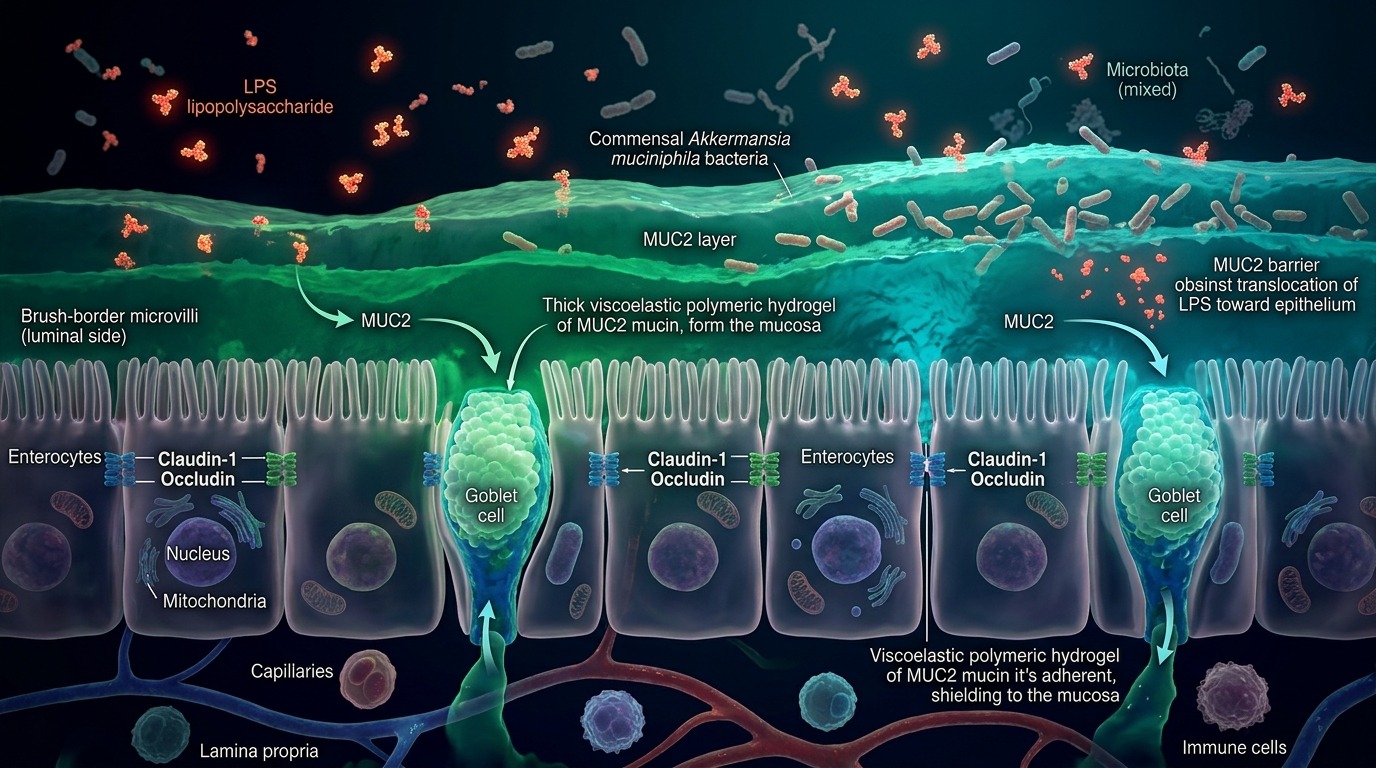
"Imagine our intestinal lining as a highly secure fortress wall protecting a wealthy kingdom. The epithelial cells are tightly packed bricks, and the tight junction proteins act as smart electronic locks that only open for VIP guests like nutrients and water under strict surveillance. Zonulin acts like an inside saboteur that accidentally triggers a mass unlock signal, causing the Occludin and ZO-1 locksets to dismantle. Consequently, dangerous intruders like LPS endotoxins (resembling toxic smoke or thieves) easily slip through the widened gaps, entering the internal circulation and setting off systemic inflammatory alarms across the entire city."
Molecular Pathway Flowchart
Gluten or Dysbiosis
Epithelial Zonulin Secretion
EGFR & PAR2 Receptor Activation
ZO-1 & Occludin Disassembly
LPS Paracellular Translocation
LPS-LBP & TLR4 Binding
NF-kB Activation
Chronic Systemic Inflammation
1. Molecular Mechanisms: The Zonulin Pathway and Tight Junction Disassembly
The intestinal epithelial barrier is composed of a single layer of epithelial cells sealed together by the tight junction (TJ) macromolecular complex. This complex consists of transmembrane proteins, such as Occludin and Claudins, and intracellular scaffolding proteins like Zonula Occludens-1 (ZO-1), which anchor the transmembrane components to the perijunctional actomyosin ring. Under physiological conditions, these junctions act as vigilant gatekeepers, preventing large molecules and luminal microbes from passing through the paracellular pathway.
However, upon exposure to potent triggers, most notably gliadin (a glycoprotein present in gluten) or bacterial toxins during gut dysbiosis, enterocytes are stimulated to secrete Zonulin (pre-haptoglobin 2). Once released into the intestinal lumen, Zonulin binds to two specific receptors on the apical surface of epithelial cells: Epidermal Growth Factor Receptor (EGFR) and Protease-Activated Receptor 2 (PAR2).
This dual receptor activation initiates a complex intracellular signaling cascade dependent on phospholipase C (PLC) and protein kinase C (PKC). Activated PKC induces actin polymerization and subsequent contraction of the perijunctional actomyosin ring. This mechanical tension causes the dissociation of ZO-1 from Occludin and Claudin-1. Lacking the structural support of ZO-1, the transmembrane tight junction proteins disassemble and undergo endocytosis, widening the paracellular space from nanometers to micrometers, thereby compromising mucosal barrier integrity.
2. LPS Translocation and the Paradox of Metabolic Endotoxemia
The primary paradox of leaky gut syndrome is that it does not manifest as acute, localized inflammation such as fever or swelling. Instead, it silently drives a systemic phenomenon known as metabolic endotoxemia. When tight junctions are disrupted, Lipopolysaccharide (LPS), a highly toxic endotoxin located in the outer membrane of Gram-negative bacteria in the gut lumen, easily translocates across the compromised paracellular gaps into the lamina propria and directly enters the portal circulation.
Once in the bloodstream, LPS binds to LPS-Binding Protein (LBP). This LPS-LBP complex is subsequently presented to Toll-like Receptor 4 (TLR4) and its co-receptor CD14 on the surface of immune cells, particularly hepatic Kupffer cells and adipose tissue macrophages. TLR4 activation triggers the MyD88-dependent signaling pathway, culminating in the phosphorylation and degradation of the inhibitory protein IkB. This releases the transcription factor NF-kB (Nuclear Factor kappa B) to translocate into the nucleus, where it upregulates the transcription of pro-inflammatory cytokines, including TNF-alpha, IL-6, and IL-1beta. This low-grade, chronic systemic inflammation impairs insulin signaling by inducing serine phosphorylation of IRS-1 (Insulin Receptor Substrate 1), driving insulin resistance and metabolic dysfunction.
| Physiological & Clinical Metric | Healthy Intestinal Barrier | Leaky Gut & Metabolic Endotoxemia |
|---|---|---|
| Serum Zonulin Levels | Low (Below 15 ng/mL) | Markedly elevated (Above 30 ng/mL) |
| Circulating LPS Endotoxin | Minimal (Below 0.1 EU/mL) | Elevated 2 to 3 fold (0.2 - 0.8 EU/mL) |
| Tight Junction (TJ) Integrity | Intact ZO-1 and Occludin complexes | Disassembled ZO-1, phosphorylated Occludin |
| Immune & Inflammatory Response | Immune tolerance, homeostasis | TLR4 activation, elevated TNF-alpha and IL-6 |
| Tissue Insulin Sensitivity | Normal (High sensitivity) | Insulin resistance via IRS-1 inhibition |
3. Practical Takeaways & Clinical Protocols for Gut Barrier Optimization
To reverse intestinal permeability and halt the systemic influx of LPS endotoxins, clinical strategies must target the inhibition of Zonulin secretion and the reconstruction of tight junction proteins.
First, eliminating triggers that stimulate Zonulin release is essential. Dietary gliadin from wheat and ultra-processed foods containing emulsifiers (such as polysorbate-80 and carboxymethylcellulose) should be strictly avoided, as they directly degrade the protective mucus layer of the gut.
Second, target specific bioactive compounds to restore tight junction integrity: - L-Glutamine: Serving as the primary fuel source for enterocytes, high-dose L-Glutamine supplementation (5-10g daily) promotes cell proliferation, mucosal repair, and upregulates the expression of ZO-1 and Occludin via the mTOR pathway. - Zinc Carnosine: This unique zinc chelate possesses high mucosal-binding affinity. Clinical trials demonstrate that Zinc Carnosine stabilizes epithelial membranes, inhibits Zonulin-induced ZO-1 disassembly, and significantly reduces small intestinal permeability. - Natural Polyphenols (Quercetin, Curcumin): These bioactive compounds function as natural inhibitors of the NF-kB pathway, reducing the production of pro-inflammatory cytokines and directly downregulating Zonulin expression. - Short-Chain Fatty Acids (SCFAs), particularly Butyrate: Produced by the fermentation of soluble fibers by beneficial taxa such as Faecalibacterium prausnitzii, Butyrate fuels colonocytes and activates GPR41/43 receptors, enhancing the synthesis of Claudin-1 and Occludin to seal the paracellular gaps.