
In modern cardiovascular therapeutics, 3-hydroxy-3-methylglutaryl-coenzyme A (HMG-CoA) reductase inhibitors (statins) remain the cornerstone for lowering low-density lipoprotein cholesterol (LDL-C) and curbing atherosclerotic plaque progression.
Yet, a frequent clinical hurdle compromising patient adherence is Statin-Associated Muscle Symptoms (SAMS), ranging from mild proximal myalgia to severe myopathy.
From a biochemical standpoint, this toxicity does not represent non-specific cellular lysis; it arises directly from upstream pathway blockade along the Mevalonate Cascade.
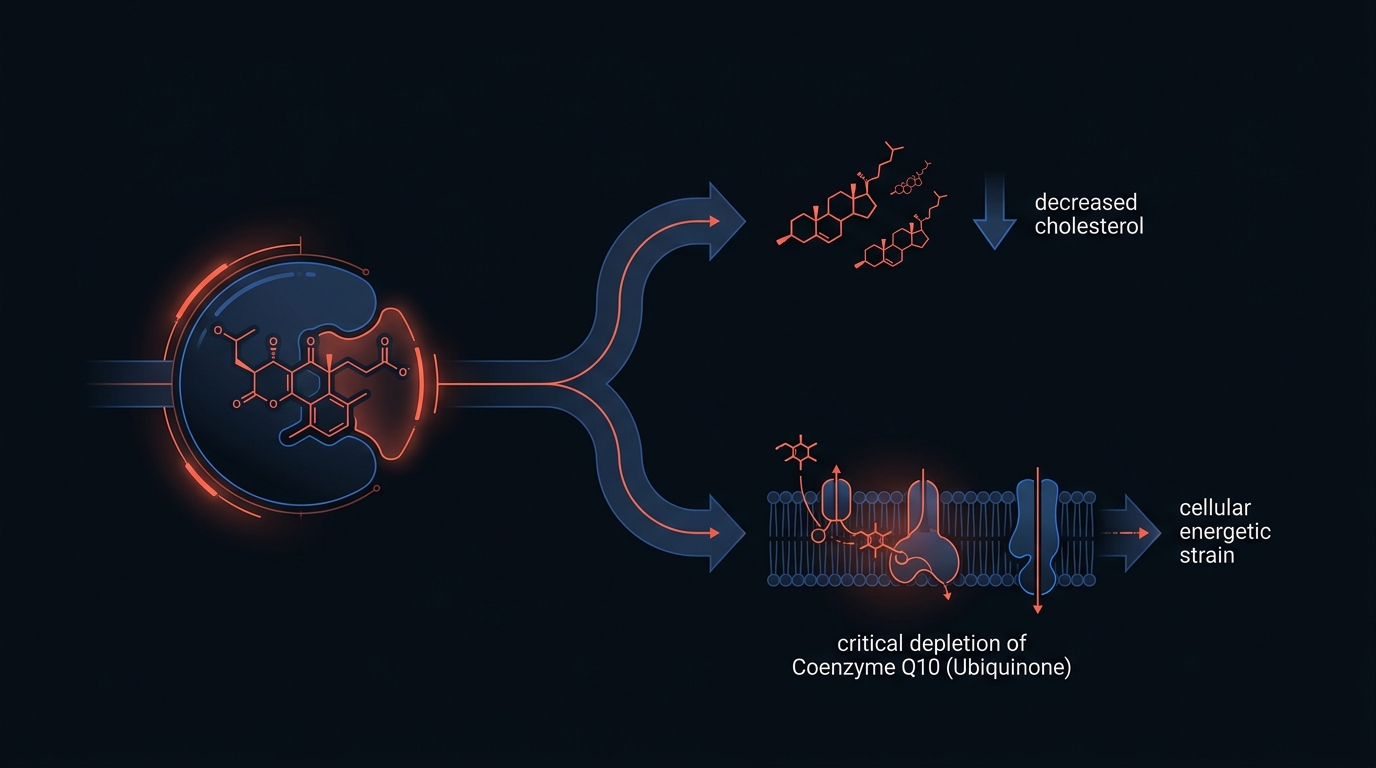
"If cellular synthesis is a major river with a master hydroelectric dam (HMG-CoA Reductase), statins close the floodgates to prevent downstream cholesterol production. Yet closing that main sluice gate unintentionally chokes off an essential energetic tributary: Coenzyme Q10. Deprived of CoQ10, skeletal muscle mitochondria run dry on ATP and cry out in exhaustion and cramping."
1. Physiological Analogy: The Upstream Dam and Diverted Tributaries
To visualize the mevalonate shunt, conceptualize cellular synthesis as an upstream river system regulated by a master hydro dam:
- HMG-CoA Reductase: Represents the primary upstream sluice gate.
- Tributary 1 (Cholesterol): Flows downstream toward cellular membranes, bile synthesis, and steroid hormone biogenesis.
- Tributary 2 (Coenzyme Q10 - Ubiquinone): An essential energetic tributary feeding into the inner mitochondrial membrane, shuttling electrons across respiratory complexes I, II, and III.
When high-potency statins close the primary upstream gate to lower circulatory cholesterol, the downstream flow of farnesyl pyrophosphate (FPP) is concomitantly arrested.
Depleted of inner-membrane ubiquinone, skeletal muscle mitochondria suffer electron leakage, impaired oxidative phosphorylation (ATP deficit), and oxidative membrane peroxidative damage. Clinically, patients present with diffuse bilateral cramping and heaviness in the quadriceps.
2. Molecular Bifurcation of the Mevalonate Pathway
Statins arrest HMG-CoA Reductase, depleting downstream Mevalonate and FPP
Cholesterol
Lowers circulating atherogenic LDL-C to attenuate cardiovascular plaque formation.
Coenzyme Q10 (Ubiquinone)
Unintentional 40-50% depletion of mitochondrial ubiquinone precipitates myalgia (SAMS).
Cellular Pathophysiology:
- Mitochondrial Complex I & II Disruption: Reduced ubiquinone pool halts electron transport, precipitating intracellular bioenergetic collapse.
- Depletion of Prenylated Small GTPases: Reductions in geranylgeranyl pyrophosphate (GGPP) destabilize myocyte cytoskeletal signaling, lowering the threshold for exercise-induced micro-tears.
3. Evidence Matrix: Pharmacokinetics and Clinical Co-Prescription
| Intervention Agent | Mechanism of Action | Evidence Tier | Clinical Implication |
|---|---|---|---|
| Atorvastatin / Rosuvastatin | Reversible HMG-CoA reductase inhibition | Grade A (Extensive RCT Endpoints) | Maintain titrated dosing to hit European Atherosclerosis Society (EAS) LDL goals |
| Coenzyme Q10 (Ubiquinol Formulation) | Exogenous replenishment of mitochondrial quinone pool | Grade B (Controlled Clinical Trials) | 100 to 200 mg daily lipid-matrix co-administration mitigates myalgia |
| SLCO1B1 Genetic Screening | Hepatic OATP1B1 transporter genotype audit | Grade B (Pharmacogenomic Guidelines) | Identifies individuals prone to elevated systemic statin exposure |
| Alternate-Day Dosing Regimen | Moderates peak plasma concentration () in myocytes | Grade B (Clinical Consensus) | Sustains substantial LDL-C reductions while alleviating muscular symptoms |
4. Practical Protocols & Clinical Action Plan for Mitigating SAMS
When patients on statin therapy present with persistent muscular discomfort, unguided abrupt cessation carries substantial rebound cardiovascular hazard, including plaque destabilization. The mechanistically sound strategy hinges on recognizing the mevalonate shunt and executing targeted protocols:
Protocol 1: Targeted Ubiquinol Replenishment
- Lipid-Matrix Ubiquinol (100 to 200 mg/day): Co-administering bioavailable ubiquinol (the reduced antioxidant form exhibiting threefold superior bioavailability over oxidized ubiquinone) replenishes the depleted inner mitochondrial electron transport chain. Always take with meals containing healthy dietary lipids to maximize lymphatic absorption.
- Magnesium Glycinate Synergy: Adding 200 to 300 mg of elemental magnesium chelate supports ATP stability and counteracts intracellular calcium leakage within fatigued skeletal muscle fibers.
Protocol 2: Pharmacokinetic Regimen Tailoring
- Hydrophilic vs Lipophilic Rotation: Lipophilic statins (such as simvastatin and atorvastatin) penetrate peripheral myocyte membranes more readily than hydrophilic alternatives (such as rosuvastatin or pravastatin). Switching to a hydrophilic molecule often alleviates localized myalgia.
- Alternate-Day Dosing: For highly sensitive patients, administering rosuvastatin every 48 hours leverages its extended terminal half-life (19 hours), sustaining significant LDL-C lowering while reducing peak intramuscular drug concentrations.
Clinical Safety Caveats:
- Never discontinue prescribed statin therapy unilaterally, especially in secondary prevention (post-stent, post-MI, or ischemic stroke), where sudden cessation doubles short-term ischemic recurrence risk.
- If severe bilateral weakness, dark tea-colored urine, or acute muscle pain occurs, immediately measure serum Creatine Kinase (CK) to rule out rare rhabdomyolysis before adjusting regimens.
Co-administering bioavailable Ubiquinol allows clinicians and patients to preserve vital cardiovascular risk reduction while shielding mitochondrial bioenergetics across peripheral musculature.