
Listen to Audio Dispatch Brief
The 60-second read
Evidence level:Mixed evidenceEnabling Night Shift or wearing blue-blocking glasses cannot fully protect sleep if high screen brightness and close viewing distances persist in dark rooms.
- Melanopsin in retinal ipRGCs is activated by both blue wavelengths and total light luminance reaching the eye.
- Staring at close screens in darkness delivers high photon density, suppressing Melatonin despite orange screen tints.
- Cognitive stimulation from screen content sustains sympathetic nervous arousal, preventing the brain from transitioning into deep sleep.
After a long and exhausting workday, the familiar routine for millions of people is crawling into bed, switching off the bedroom lights, toggling Night Shift mode to a soothing orange glow, and continuing to scroll through news feeds. Some meticulous individuals even put on blue-blocking glasses, confident that their nighttime sleep is fully safeguarded.
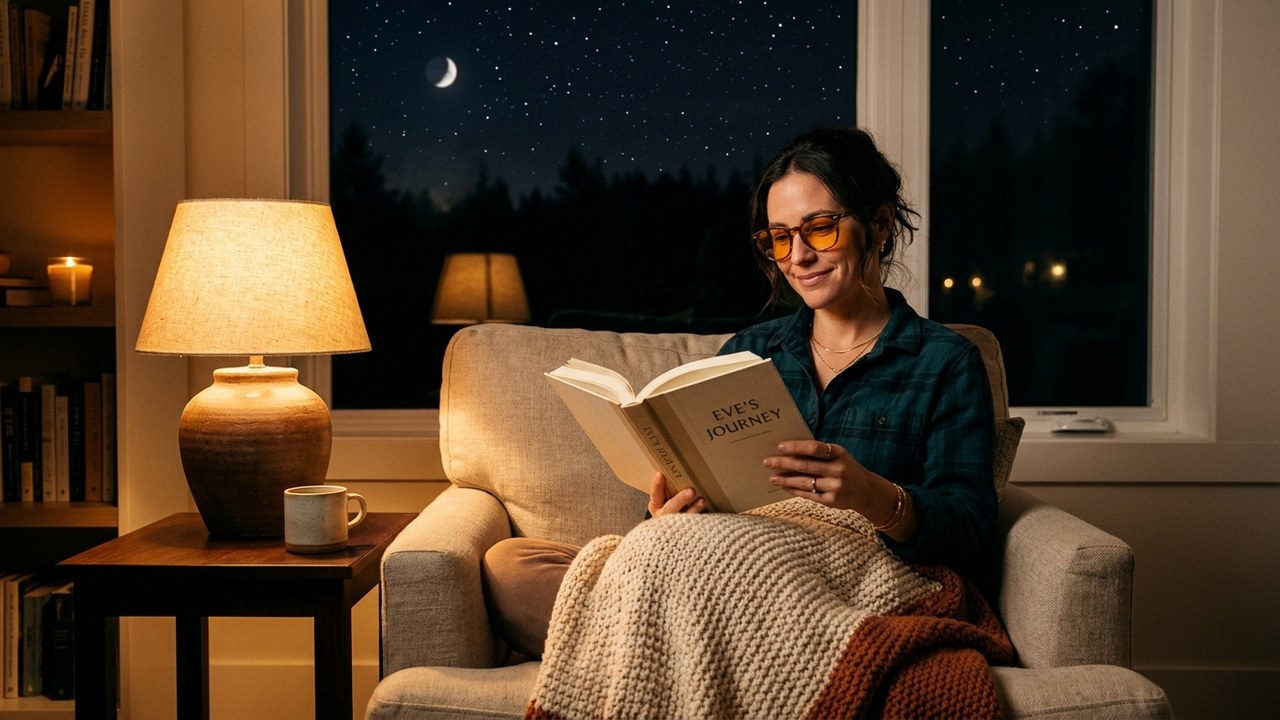
"Imagine the ipRGC visual cells in your retina as a security guard guarding your biological clock. Short-wavelength blue light acts as a piercing alarm siren that wakes the guard instantly. Turning on Night Shift or wearing amber glasses is like wrapping a blanket around the siren to muffle its harsh tone. However, if you hold that siren inches away from the guard's ear and blare it continuously, the sheer volume and vibration still wake him up, prompting him to lock the valve of Melatonin release."
Molecular Pathway Flowchart
Màn hình điện thoại đêm
Kích hoạt tế bào ipRGCs võng mạc
Ức chế Nhân trên chiasm SCN
Giảm tiết Melatonin tuyến tùng
Trễ nhịp sinh học & Trằn trọc
Photo-biological Mechanisms and the Retinal ipRGCs Cellular Code
Have you ever wondered how your brain precisely detects nightfall to prepare your body for rest? The answer does not lie within the rod or cone cells that form visual images, but inside a specialized class of retinal neurons known as ipRGCs (intrinsically photosensitive Retinal Ganglion Cells).
These ipRGCs express a unique photopigment called Melanopsin, which displays peak sensitivity to short-wavelength blue light between 460 and 480 nanometers. When light within this spectrum strikes the eye, ipRGCs instantly transmit electrical signals directly to the Suprachiasmatic Nucleus (SCN), the master circadian pacemaker in the brain. The SCN then signals the pineal gland to halt the synthesis of Melatonin, the essential hormone that opens the gateway to sleep.
Night Shift features and blue-blocking lenses operate by filtering out these blue wavelengths, shifting screen hues to warmer tones. However, our common misconception is believing that neutralizing blue light alone fully solves the physiological puzzle.
Why Color Shifting Fails: The Hidden Traps of Luminance and Viewing Distance
Photobiological research demonstrates that Melanopsin responds not only to specific light wavelengths but also profoundly to total photon density (Luminance/Lux) entering the pupil. When you extinguish ambient room lights and stare at a smartphone screen just 10 to 12 inches away, the sheer volume of photons hitting your retina remains dangerously elevated, regardless of whether the screen appears amber or orange.
Furthermore, nighttime screen interaction stimulates the sympathetic nervous system through cognitive processing, compelling content, or subtle display flicker. This combination of close-range luminance and neurological arousal continues to signal the brain that it is daytime, delaying Melatonin release.
Below is a comparative breakdown of various nighttime light exposure scenarios and their direct impact on ipRGC activation and Melatonin protection:
| Lighting Scenario | Blue Wavelength (460-480nm) | Luminance at Eye Level (Lux) | Melatonin Suppression Level | Impact on Sleep Quality |
|---|---|---|---|---|
| Standard Screen (No Night Shift) | Very High | High (80 - 150 Lux) | Severe (>50% reduction) | Phase delay, prolonged sleep onset |
| Night Shift / Amber Glasses | Low to Moderate | High (60 - 120 Lux) | Persistent (25 - 40% reduction) | Impaired deep sleep architecture |
| Low-Wattage Warm Nightlamp | Extremely Low | Low (< 10 Lux) | Negligible (< 5% reduction) | Preserves natural circadian rhythm |
| Complete Darkness (No Devices) | None | 0 Lux | Peak Secretion | Optimizes REM and NREM cycles |
Practical Applications and Clinical Sleep Hygiene Strategy
To safeguard your endogenous circadian rhythm and ensure robust nighttime Melatonin production, relying solely on software tweaks or tinted glasses is insufficient. A broader behavioral and environmental light management strategy is required.
First, implement a strict digital curfew at least 45 to 60 minutes before bedtime. If screen use is unavoidable, dim the screen brightness to its absolute minimum setting, maintain a viewing distance of at least 16 inches, and keep a warm ambient background light on to eliminate harsh contrast.
Second, pair light reduction with nervous system down-regulation, such as reading printed paper under warm lighting, listening to calming acoustics, or practicing deep diaphragmatic breathing. This lowers circulating Cortisol levels, creating an ideal physiological environment for the pineal gland to thrive.
Putting it into practice — safely
What you can do
- Turn off all electronic device screens 45 to 60 minutes prior to entering the bedroom.
- If device use is mandatory, reduce screen brightness to minimum and keep ambient warm room light on.
- Maintain a minimum viewing distance of 16 inches from eyes to screen, avoiding close face-to-screen contact in bed.
When to talk to a doctor
Consult a sleep specialist if persistent insomnia continues for more than three weeks despite strict light hygiene practices.