
Dietary carbohydrate dogma frequently categorizes polysaccharides exclusively as systemic glycemic drivers. In colonic physiology, however, an architecturally distinct fraction resists upper gastrointestinal enzymatic hydrolysis: Resistant Starch (RS).
Navigating the stomach and small intestine intact, resistant starch arrives in the cecum and ascending colon as an unadulterated macromolecular substrate for commensal microbial consortia.
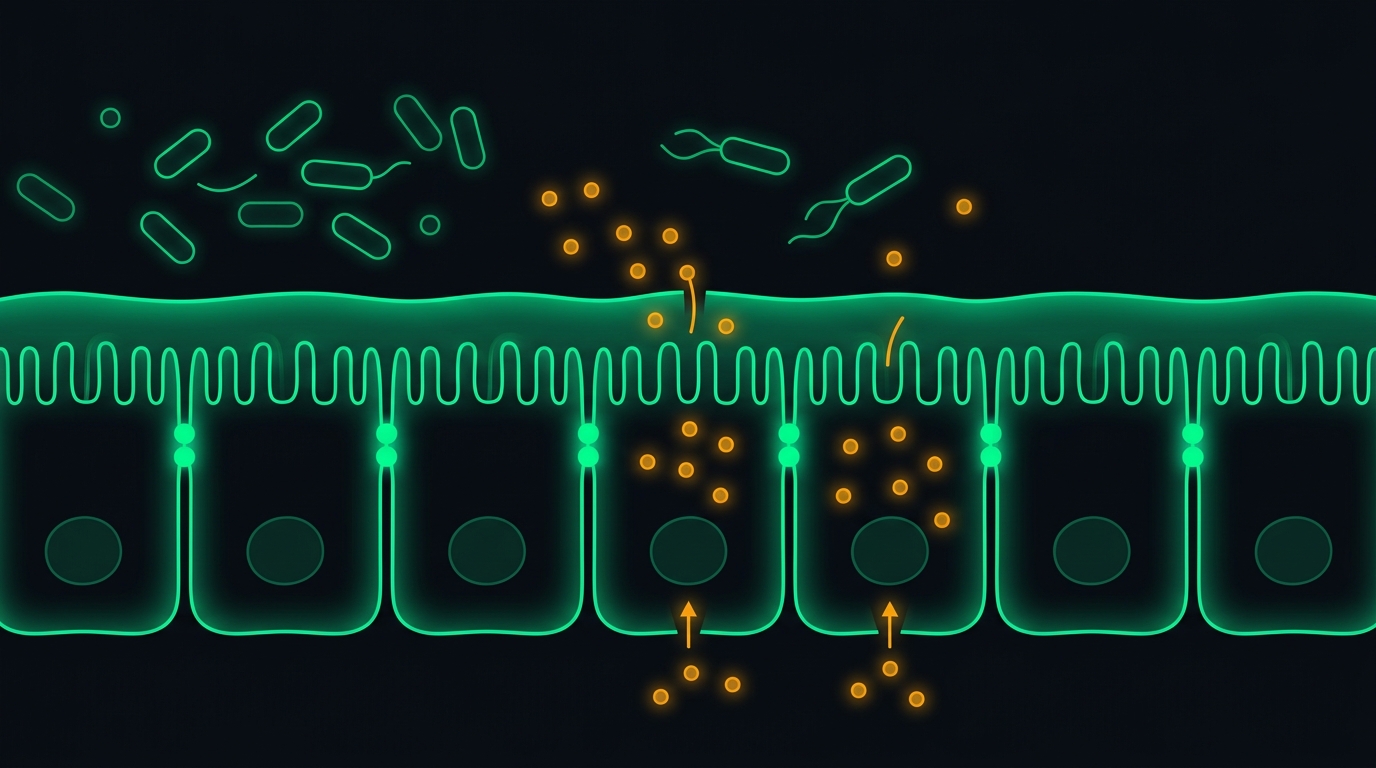
"If the intestinal mucosal barrier is an ancient protective fortress where epithelial cells are bricks, Claudin-1 tight junction proteins serve as the sealing mortar. Colonocytes do not survive on arterial glucose; they depend on microbial butyrate. Deprived of butyrate, the mortar crumbles, opening the gates for bacterial endotoxins to flood into systemic circulation."
1. Physiological Architecture: The Epithelial Wall and Cellular Fuel
The human intestinal mucosal barrier operates analogously to a reinforced defensive masonry wall:
- Epithelial Masonry: Composed of a contiguous single monolayer of polarized colonocytes.
- Intercellular Mortar: Proteinaceous multiprotein complexes forming tight junctions (Claudin-1, Occludin, ZO-1).
- Luminal Aggressors: Trillions of resident bacteria and shedding fragments of lipopolysaccharide (Endotoxin LPS).
- The Energetic Prerequisite: Unlike systemic tissues supplied by systemic arterial glucose, mature colonocytes derive greater than 70% of their energetic requirements directly from luminal Butyrate.
When fermentable substrates are absent, colonocytes experience energetic starvation. Intercellular tight junctions dissociate, elevating paracellular permeability (Leaky Gut) and driving systemic metabolic endotoxemia via portal circulation.
2. Anaerobic Fermentation and the 60:20:20 Stoichiometric Ratio
Dietary resistant starch sources, including retrograded amylose (RS3) and raw granule matrices (RS2), encounter specialized glycoside hydrolases within resident taxa such as Faecalibacterium prausnitzii and Bifidobacterium adolescentis.
Anaerobic glycolysis yields a distinct stoichiometric molar ratio of short-chain fatty acids:
Dietary RS2/RS3 Resistant Starch
Colonic Microbial Fermentation
SCFA Synthesis: Acetate 60% : Propionate 20% : Butyrate 20%
Claudin-1 Tight Junction Assembly & HDAC Inhibition
Triad of Molecular Endpoints:
- Luminal Acidification: Lowering colonic luminal pH (pH 5.5 to 6.2) suppresses opportunistic enteropathogens and promotes divalent cation chelation and absorption.
- Histone Deacetylase (HDAC) Inhibition: Butyrate acts as an endogenous pan-HDAC inhibitor, upregulating anti-inflammatory FOXP3+ regulatory T cells and promoting cell cycle arrest in dysplastic colonocytes.
- Goblet Cell Mucin Secretion: Stimulates MUC2 transcription, augmenting the protective dual-layer mucus hydrogel.
3. Comparative Taxonomy of Resistant Starch Fractions
| Starch Fraction | Native Matrix & Sources | Thermal Stability | Butyrogenic Potential |
|---|---|---|---|
| RS1 (Physically Inaccessible) | Intact whole kernels, coarsely ground legumes | Thermostable | Moderate |
| RS2 (Native Crystalline Granules) | Unripe green bananas, raw high-amylose maize | Thermolabile (gelatinizes >65°C) | High |
| RS3 (Retrograded Starch) | Cooled boiled potatoes, refrigerated rice, oats | Thermostable upon mild reheat | Exceptional, promotes Claudin-1 |
| RS4 (Chemically Modified) | Cross-linked synthetic food starch | Highly stable | Formulation dependent |
4. Practical Protocols & Clinical Action Plan for Gut Barrier Restoration
Rather than adopting indiscriminate carbohydrate restriction, strategic integration of retrograded resistant starch represents a robust, low-cost bio-intervention for metabolic and immunological homeostasis:
Protocol 1: The RS3 Starch Retrogradation Culinary Technique
- The Cook-and-Cool Method: Cooking starchy whole foods (such as jasmine rice, russet potatoes, or whole steel-cut oats) and immediately refrigerating them at 4 degrees Celsius for 12 to 24 hours induces amylose retrogradation.
- Preserving Crystalline Structure: Gelatinized linear amylose chains realign into tightly packed crystalline helical structures that digestive alpha-amylase cannot cleave. Reheating gently under 60 degrees Celsius preserves this resistant structure while halving glycemic index impact.
Protocol 2: Titrated Prebiotic RS2 Supplementation
- Gradual Microbiome Adaptation: Begin with 5 to 10 grams daily of raw green banana flour or unmodified potato starch mixed into room-temperature water or smoothies. Titrate upwards by 5 grams each week toward a target therapeutic dose of 20 to 30 grams.
- Biomarker Outcomes: Sustained RS intake elevates circulating butyrate, decreases fasting hs-CRP, and lowers stool pH, cultivating a hostile environment for pathogenic Proteobacteria.
Clinical Safety Caveats:
- In patients diagnosed with Small Intestinal Bacterial Overgrowth (SIBO) or acute active Inflammatory Bowel Disease (IBD) flare-ups, fermentable prebiotics can induce severe abdominal distention and painful bloating. Address proximal small intestinal microbial overgrowth before escalating distal colon prebiotics.
- Never expose raw RS2 powders to boiling liquids, as heat gelatinizes the starch granules into rapidly digestible simple carbohydrates.