
When we step into a freezing room, our body immediately responds by shivering to generate muscular heat. Yet, deep within the brown adipose tissue deposits in our neck and supraclavicular areas, a far more sophisticated biological miracle is unfolding: non-shivering thermogenesis. For half a century, the medical community believed that Uncoupling Protein 1 (UCP1) on the inner mitochondrial membrane was the sole gatekeeper of this process, dissipating the proton gradient to release heat. This dogma led to the failure of numerous clinical trials aiming to activate UCP1 for weight loss, as the body consistently triggered compensatory mechanisms. The paradigm shifted when researchers discovered that even in the complete absence of UCP1, the body possesses a highly resilient, backup thermogenic network. This network is driven by the creatine futile cycle and extracellular succinate signaling. This discovery not only shatters old dogmas but also opens a revolutionary chapter in treating chronic metabolic diseases.
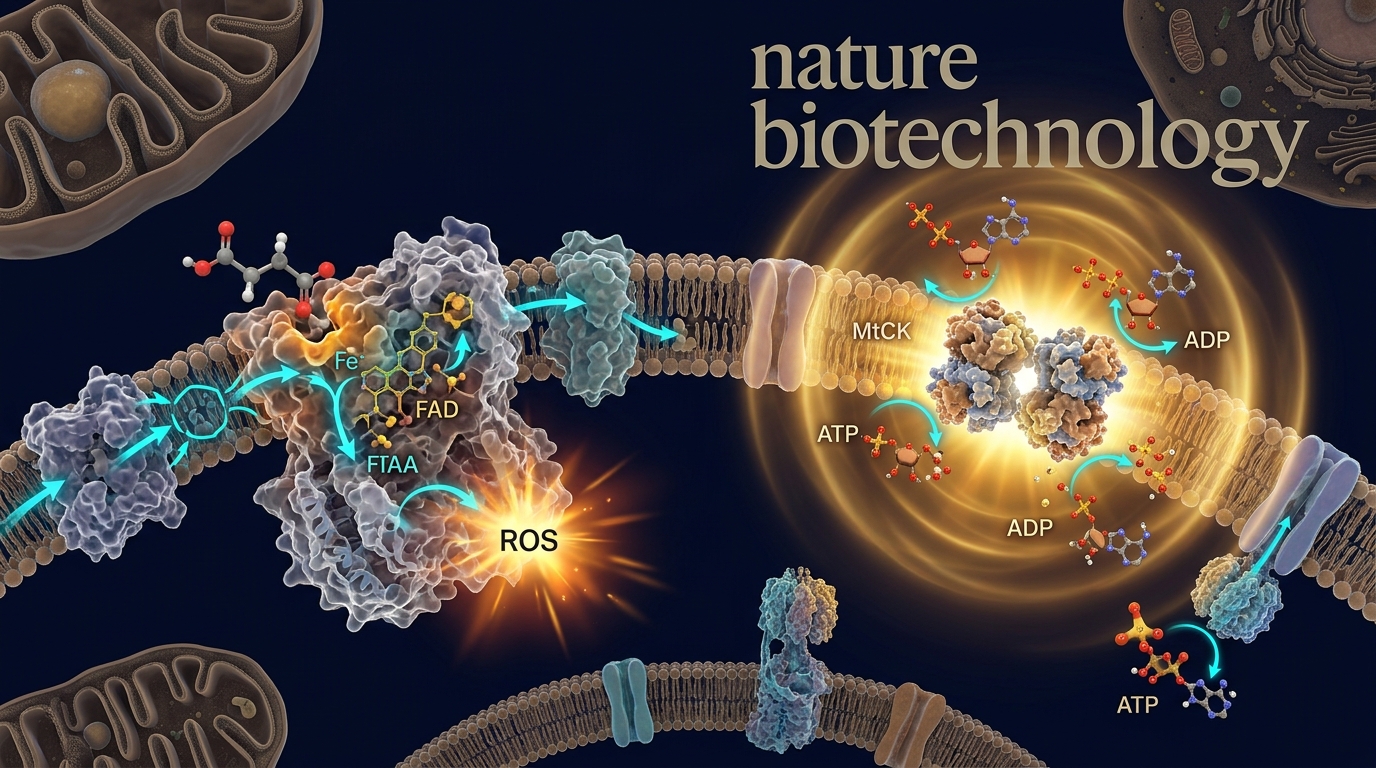
"Imagine the mitochondria of brown adipocytes as a massive thermal power plant. The traditional UCP1-mediated thermogenesis acts like opening a pressure-relief valve directly on the steam boiler: instead of using steam pressure to spin turbines and generate electricity (ATP), the plant deliberately vents the steam to release energy purely as heat. On the other hand, the creatine futile cycle operates like an idle, continuous water-pumping loop. Water is pumped to a high reservoir and immediately drained back down without serving any production purpose, consuming engine fuel and generating immense friction heat. Succinate accumulation acts as a molecular booster, drastically accelerating this pumping speed and forcing the cell to burn calories at an unprecedented rate."
Molecular Pathway Flowchart
Cold Exposure / Adrenergic Activation
Intracellular Succinate Accumulation
Succinate Oxidation via SDH (Complex II)
Selective ROS Burst
Creatine Futile Cycling via CKMT1A/1B
Continuous ATP Hydrolysis
Superior Thermogenic Heat Release
1. Molecular Topography: The Rise of Creatine Futile Cycling and the GPR91 Receptor
To comprehend this metabolic breakthrough, we must look deep into the mitochondrial architecture of brown and beige adipocytes. The canonical thermogenic pathway relies on Uncoupling Protein 1 (UCP1), which acts as a proton channel across the inner mitochondrial membrane, dissipating the proton motive force without generating ATP. In stark contrast, the UCP1-independent pathway utilizes a completely different mechanism: the creatine futile cycle.
In this cycle, mitochondrial creatine kinase isoforms (CKMT1A and CKMT1B) transfer a phosphate group from ATP to creatine, yielding phosphocreatine (PCr). Almost instantaneously, tissue-nonspecific alkaline phosphatase (TNAP) hydrolyzes phosphocreatine back into creatine and inorganic phosphate (Pi). This continuous loop consumes substantial amounts of ATP without performing any mechanical work, converting the chemical energy of phosphate bonds entirely into heat.
Concurrently, the accumulation of succinate (a key TCA cycle intermediate) acts as a molecular trigger. Upon cold exposure, succinate is actively sequestered into the mitochondria via dicarboxylate carriers and rapidly oxidized by succinate dehydrogenase (SDH, Complex II). This rapid oxidation drives an intense electron flow, causing reverse electron transport and generating selective reactive oxygen species (ROS). This localized ROS signal strongly activates the creatine futile cycle, maximizing energy expenditure.
2. The Bioenergetic Paradox: UCP1-Dependent vs UCP1-Independent Thermogenesis
The major biological paradox lies in why the body preserves two parallel thermogenic systems. Clinical trials targeting UCP1 via chronic adrenergic stimulation often lead to receptor desensitization and severe cardiovascular side effects, including hypertension and tachycardia. Conversely, the creatine futile cycle is regulated by intracellular metabolic cues such as succinate levels and ATP/ADP ratios, providing sustained thermogenesis without overactivating the sympathetic nervous system.
The following table contrasts the two distinct thermogenic modalities:
| Parameter | UCP1-Dependent Pathway | UCP1-Independent Pathway (Creatine-Driven) |
|---|---|---|
| Core Mechanism | Proton leak across the inner mitochondrial membrane | Continuous phosphorylation and dephosphorylation of creatine |
| Key Enzymes | UCP1 (Uncoupling Protein 1) | CKMT1A/1B, TNAP (Tissue-Nonspecific Alkaline Phosphatase) |
| Primary Activator | Free fatty acids directly activating UCP1 | Succinate, selective ROS from Complex II (SDH) |
| ATP Consumption | Does not consume ATP (prevents ATP synthesis) | Directly consumes massive amounts of cellular ATP |
| Regulatory System | Beta-3 Adrenergic receptors (sympathetic) | Intracellular metabolic signaling and GPR91 receptor |
| Clinical Sustainability | High risk of receptor desensitization | Sustainable, minimal cardiovascular side effects |
3. Translational Protocols & Clinical Strategies in Metabolic Longevity
Based on these insights into the creatine futile cycle and succinate signaling, metabolic longevity experts propose three specific clinical protocols to optimize metabolic rate and visceral fat loss:
-
Deliberate Cold Exposure (DCE): Daily exposure to cold temperatures (10 to 14 degrees Celsius) for 10-15 minutes triggers significant succinate accumulation in brown adipose tissue, initiating the thermogenic cycle without requiring strenuous exercise.
-
Creatine Loading with Thermal Activation: Supplementing with creatine monohydrate (3-5g/day) not only supports skeletal muscle but also provides abundant substrate for the creatine futile cycle in beige fat, particularly when paired with cold therapy.
-
Optimizing Succinate Dehydrogenase (SDH) Activity: Utilizing cofactors such as Coenzyme Q10 and TCA cycle rate-limiting vitamins (such as Riboflavin/B2 and Niacin/B3) enhances succinate oxidation efficiency, accelerating the browning of white adipose tissue (WAT) into beige adipocytes.