Listen to Audio Dispatch Brief
The 60-second read
Evidence level:Human trials (RCT)Sulforaphane does not directly neutralize free radicals; instead, it activates the Nrf2 pathway, enabling cells to continuously manufacture their own potent endogenous antioxidant enzymes.
- Sulforaphane liberates Nrf2 from Keap1, significantly boosting glutathione and Phase 2 enzymes.
- Endogenous antioxidant activation outperforms direct vitamin C/E by offering continuous, self-renewing cellular protection.
- Broccoli sprouts aged 3-5 days yield 20-50 times higher Glucoraphanin concentrations than mature broccoli.
For decades, clinical nutrition has been dominated by direct exogenous antioxidant supplements. Millions of individuals consume grams of vitamin C, vitamin E, or unstandardized polyphenols daily, believing this will halt aging and prevent chronic disease.
Nevertheless, large-scale clinical trials have yielded surprising results: high-dose exogenous antioxidants fail to reduce all-cause mortality and can sometimes disrupt essential physiological signaling, suppressing beneficial cellular adaptations.
The underlying reason is that exogenous antioxidants act stoichiometrically (1:1), meaning one antioxidant molecule scavenges only one free radical molecule before being irreversibly consumed.
Conversely, nature has equipped human cells with an extraordinary endogenous defensive network. Sulforaphane, a natural isothiocyanate extracted from broccoli sprouts (Brassica oleracea var. italica), serves as the master molecular key that unlocks this system without inducing adverse pro-oxidant effects.
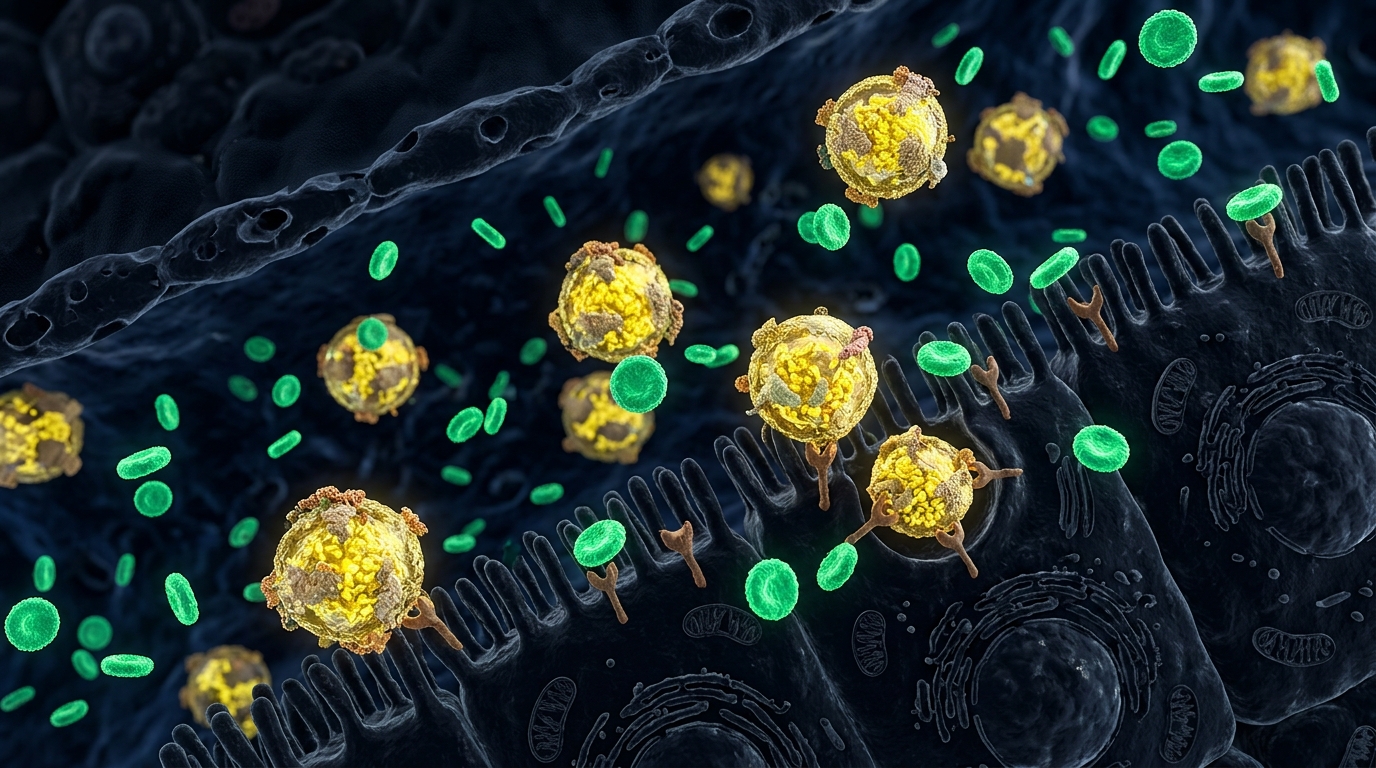
"Imagine your cellular architecture as a high-rise building facing an impending fire hazard from oxidative stress. Taking exogenous vitamin C or E is like buying individual handheld fire extinguishers and placing them inside: they run out after a single use. In contrast, Sulforaphane is neither water nor an extinguisher. It acts as a master alarm pull station, activating the building's automated sprinkler system and alerting the internal professional firefighting team (the cytoprotective genome). This endogenous system operates continuously and self-regenerates, guaranteeing long-term protection against systemic oxidative surges."
Molecular Pathway Flowchart
Mầm súp lơ xanh (Glucoraphanin)
Myrosinase (Thủy phân)
Sulforaphane tự do
Gắn kết cysteine trên Keap1
Giải phóng Nrf2
Nrf2 dịch chuyển vào nhân tế bào
Gắn kết yếu tố ARE
Biểu hiện chuỗi enzyme pha 2: NQO1, HO-1, GST, GCL
Bảo vệ ty thể & Khôi phục cân bằng Redox
Micro-molecular mechanisms & Key enzymes/receptors
Sulforaphane (SFN) is a sulfur-rich isothiocyanate produced by the enzymatic hydrolysis of its glucosinolate precursor, Glucoraphanin, catalyzed by the enzyme Myrosinase upon plant tissue disruption or mastication. Upon entry into human cells, Sulforaphane rapidly crosses cell membranes due to its favorable lipophilic and small molecular weight profile.
The central axis of Sulforaphane's pharmacodynamics lies in its direct interaction with the Keap1-Nrf2 protein complex. Under basal physiological conditions, Nrf2 (Nuclear factor erythroid 2-related factor 2) is sequestered in the cytoplasm by its negative regulator, Keap1 (Kelch-like ECH-associated protein 1). Keap1 acts as a substrate adaptor for a Cullin 3-based E3 ubiquitin ligase, targeting Nrf2 for continuous proteasomal degradation with a rapid half-life of roughly 20 minutes.
Sulforaphane contains a highly reactive electrophilic isothiocyanate group (-N=C=S) that chemically interacts with specific reactive cysteine residues on Keap1, particularly Cys151, Cys273, and Cys288. This alkylation induces a conformational change in Keap1, disrupting its ability to polyubiquitinate Nrf2.
Consequently, newly synthesized Nrf2 escapes degradation, accumulates in the cytoplasm, and translocates into the nucleus. Within the nucleus, Nrf2 heterodimerizes with small Maf proteins (sMaf) and binds directly to specific genomic sequences known as Antioxidant Response Elements (ARE).
This binding event robustly activates the transcription of a battery of Phase 2 cytoprotective enzymes. Key enzymes include Glutamate-Cysteine Ligase (GCL, the rate-limiting enzyme in endogenous Glutathione synthesis), NAD(P)H Quinone Dehydrogenase 1 (NQO1, preventing quinone-mediated ROS formation), Heme Oxygenase 1 (HO-1, catabolizing heme into anti-inflammatory biliverdin and carbon monoxide), and Glutathione S-Transferases (GST, essential for xenobiotic conjugation).
Furthermore, Sulforaphane acts as a natural inhibitor of Class I and II Histone Deacetylases (HDACs), promoting chromatin relaxation and increasing transcriptional access to genomic protective loci, thereby solidifying mitochondrial integrity and preventing genomic instability.
Biological paradox & Clinical Comparison Table
The Antioxidant Paradox long confounded biomedical researchers: Why did clinical trials with direct high-dose antioxidants (such as alpha-tocopherol or high-dose ascorbic acid) fail to reduce cancer incidence or cardiovascular mortality?
The answer lies in the concept of Mitohormesis and signaling hormesis. Physiological levels of Reactive Oxygen Species (ROS) function not as toxic byproducts, but as indispensable signaling molecules required for cellular adaptation. Flooding the system with direct exogenous scavengers neutralizes these vital signaling spikes, effectively paralyzing the cell's endogenous stress-response machinery.
Sulforaphane operates as a mild electrophilic hormetic agent. Rather than directly neutralizing radicals, it mildly challenges the cell, triggering a robust, highly amplified endogenous defensive response that outlasts direct scavengers by orders of magnitude.
| Physiological Parameter / Clinical State | Direct Exogenous Antioxidants (Vitamin C / E) | Endogenous Activation via Sulforaphane (Nrf2) |
|---|---|---|
| Molecular Mechanism | Stoichiometric 1:1 reaction (1 molecule neutralizes 1 radical) | Genomic activation (1 molecule triggers thousands of enzyme cascades) |
| Duration of Action | Transient (hours; consumed immediately upon reaction) | Sustained genomic induction (24 to 48 hours post-exposure) |
| Mitochondrial Impact | Blunts beneficial mROS signals, reducing hormetic exercise adaptation | Promotes mitochondrial biogenesis (PGC-1alpha) and Mitophagy |
| Phase 2 Detoxification Capability | Ineffective at xenobiotic conjugation or heavy metal clearance | Upregulates Glutathione synthesis, GST, and NQO1 activity |
This fundamental distinction elucidates why Sulforaphane offers superior mitochondrial protection, preserving mitochondrial membrane potential (MMP) and suppressing electron leakage during metabolic stress.
Clinical strategies, Practical application & Lifestyle optimization
To effectively translate Sulforaphane into clinical practice and everyday nutrition, one must overcome a primary pharmacokinetic bottleneck: Sulforaphane does not exist in substantial free quantities in intact brassica vegetables, but as the precursor Glucoraphanin.
For Glucoraphanin to convert into bioactive Sulforaphane, it requires enzymatic cleavage by Myrosinase. However, Myrosinase is highly heat-sensitive and easily denatured at temperatures exceeding 60 degrees Celsius.
Strategy 1: Prioritize Broccoli Sprouts aged 3 to 5 days. Fresh broccoli sprouts contain up to 20 to 50 times higher concentrations of Glucoraphanin compared to mature broccoli heads.
Strategy 2: The 'Hack and Hold' technique. When preparing mature broccoli, chop or crush it finely and let it sit at room temperature for 30 to 45 minutes before light steaming. This incubation window permits endogenous Myrosinase to complete the conversion before heat inactivation.
Strategy 3: Exogenous Myrosinase reactivation. If broccoli must be cooked thoroughly, supplement the meal with a pinch of raw mustard seed powder. Raw mustard seeds contain heat-stable or unheated active Myrosinase, which restores Sulforaphane bioavailability up to 4-fold in the digestive tract.
Strategy 4: Clinical supplementation protocols. When prescribing nutraceuticals, choose standardized formulations containing combined Glucoraphanin + active Myrosinase, or stabilized microencapsulated free Sulforaphane. Clinical target dosages range between 30 to 60 mg of yield Sulforaphane daily, taken in the morning with a meal containing light healthy fats.
Safety Considerations: Patients with severe hypothyroidism should monitor iodine intake, as extremely high concentrations of dietary isothiocyanates can theoretically compete for thyroidal iodine uptake, although this effect remains clinically negligible at standard dietary or supplemental Sulforaphane doses.
Putting it into practice — safely
What you can do
- Apply the hack-and-hold technique: chop broccoli finely and wait 30-45 minutes before light steaming.
- Consume 30-50g of fresh broccoli sprouts daily or sprinkle raw mustard seed powder over cooked brassicas.
- If using supplements, choose standardized Glucoraphanin + Myrosinase formulations yielding 30-60 mg Sulforaphane daily.
When to talk to a doctor
Consult your physician if undergoing active chemotherapy or taking medications metabolized heavily by CYP enzymes.