
Phytocodex emblemPhytocodex
🇬🇧 English Edition|Scientific Literature Synthesis
01 · Clearance tollbooths managing prescription drug traffic
Hepatic Cytochrome P450 Enzymes

The liver relies on enzymes like CYP3A4 to break down medications. Anything altering tollgate throughput destabilizes target drug levels in blood.

02 · Aggressive wardens throwing tollgates wide open prematurely
Enzymatic Induction (e.g., St. John's Wort)

Accelerates drug degradation so rapidly that cardiovascular drugs or oral contraceptives are flushed out before ever achieving therapeutic targets.

03 · Heavy barricades trapping medication molecules in transit
Enzymatic Inhibition (e.g., Grapefruit, Piperine)

Stops hepatic clearance cold. Prescription statins or anticoagulants accumulate 300% to 500% above safety limits, risking acute organ toxicity.

Clinical Deep-DiveGut Literature-Synthesized & EBM-Verified 8 min read

The Natural Bioactives & Prescription Drug Interaction Matrix: When Botanical Supplements Turn Lethal

Synergistic, antagonistic, or silent? Deciphering hepatic Cytochrome P450 mechanics: why St. John's Wort compromises oral contraceptives, grapefruit compounds amplify statin toxicity, and ginger or curcumin can precipitate major bleeding when combined with anticoagulants.

CH
Dr. Xuan Chien HoangDoctor of Natural Sciences (Dr. rer. nat.) · University of Hamburg, Germany
2026-05-18T09:00:00ZDOI: 10.1097/CLI.0000000000000042 2 Referenced Literature

A widespread and dangerous misconception remains deeply entrenched among consumers: "Because herbal remedies are natural, they are inherently benign, can be taken anytime in arbitrary doses, and never interfere with conventional medications."

Clinical reality across major medical centers reveals the exact opposite: Natural bioactive phytochemicals are potent pharmacologically active compounds. Upon entering systemic circulation, they share identical transporter pumps and hepatic metabolic clearance enzymes with prescription medications taken for chronic conditions.

An unguided combination can transform a life-saving prescription into an inert compound or spike serum concentrations to hepatotoxic and cardiotoxic thresholds.
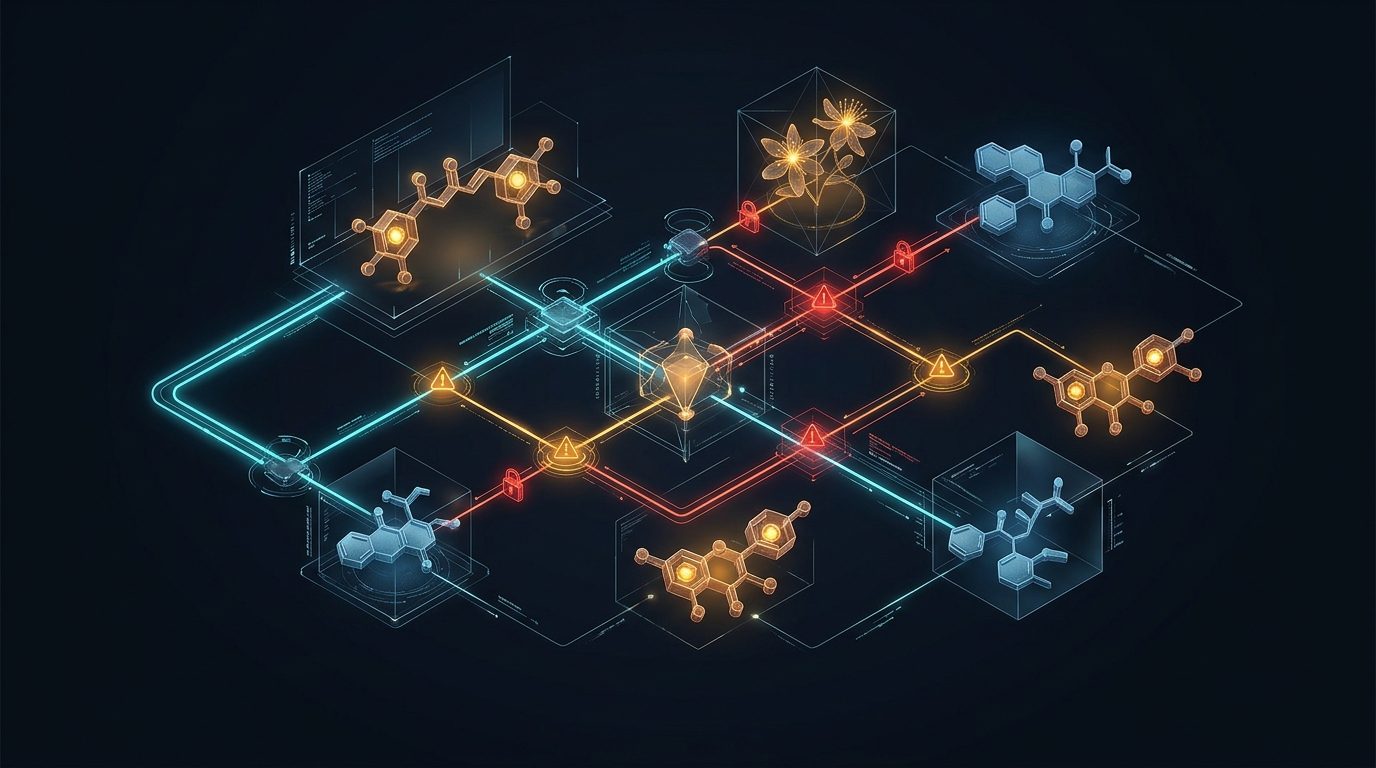
Molecular interaction matrix model illustrating botanical bioactives interacting with prescription drug receptors via CYP450 enzymes

"Our liver maintains specialized clearance tollbooths run by Cytochrome P450 enzymes. Certain botanicals, such as St. John's Wort, act like aggressive traffic wardens opening every gate wide, sweeping prescription drugs out of the bloodstream before they ever reach target tissues. Conversely, compounds like grapefruit furanocoumarins or piperine erect barricades across the gates, causing medication molecules to pile up dangerously in the bloodstream, triggering systemic toxicity."


1. Molecular Foundations: The Cytochrome P450 Arena & P-gp Efflux

The vast majority of clinically significant herb-drug interactions occur through two fundamental pharmacokinetic pathways:

Molecular Mechanism Pipeline
PHASE 01STIMULUS

Simultaneous Ingestion

Next ➔Inspect
PHASE 02SIGNAL HUB

Competition for CYP3A4 / CYP2C9 / P-gp

Next ➔Inspect
PHASE 03INHIBITION

Enzymatic Inhibition (Toxicity) OR Induction (Therapeutic Failure)

Terminal ✓Inspect

1. Hepatic Enzyme Induction: Precipitating Therapeutic Failure

When active phytochemicals bind nuclear receptors (such as the Pregnane X Receptor, PXR), the liver accelerates the transcription of metabolic enzymes, clearing medications several times faster than normal. The classic culprit is St. John's Wort (Hypericum perforatum):

  • Drastically depresses serum concentrations of the immunosuppressant Cyclosporine, triggering acute kidney allograft rejection in transplant recipients.
  • Neutralizes oral contraceptives, antiretroviral HIV therapies, and cardiac inotropes like Digoxin.

2. Hepatic Enzyme Inhibition: Escalating Drug Concentration to Toxic Levels

When botanical bioactives occupy or irreversibly disable metabolic enzymes:

  • Grapefruit Furanocoumarins: Strongly inhibit intestinal CYP3A4, causing serum concentrations of statins (simvastatin, atorvastatin) to spike 300% to 500%, precipitating severe rhabdomyolysis and acute renal failure.
  • High-Dose Piperine: Inhibits UGT glucuronidation and CYP3A4, inadvertently multiplying the potency of antihypertensives and central nervous system depressants.

2. Four High-Risk Interactions to Avoid Completely

Botanical Compound + Prescription DrugMolecular MechanismReal-World Clinical RiskMedical Recommendation
St. John's Wort + WarfarinPotent induction of CYP2C9 and CYP3A4Accelerated warfarin clearance, leading to sub-therapeutic INR and ischemic strokeStrictly contraindicated
Ginkgo Biloba / Curcumin + AnticoagulantsSynergistic platelet aggregation inhibitionUncontrolled hemorrhage, gastrointestinal bleeding, hemorrhagic strokeDiscontinue botanicals 14 days prior to surgery
Grapefruit Juice + AmlodipineIntestinal CYP3A4 enzyme inhibitionUncontrolled medication accumulation, sudden severe hypotension, syncopeSeparate intake by at least 24 hours
Calcium / Iron + Fluoroquinolones, TetracyclinesInsoluble chelation complex formation in gastric lumenComplete failure of antibiotic absorption, septic progressionSeparate administration by a minimum of 2 to 3 hours

3. Practical Protocols & Clinical Safety Guidelines: Navigating Herb-Drug Interactions

Preventing dangerous pharmacological cross-talk requires adhering to evidence-based co-administration protocols:

Protocol 1: The Four-Hour Separation Rule for Chelation

  • Mineral and Cation Spacing: Divalent and trivalent minerals (calcium carbonate, ferrous sulfate, magnesium glycinate, zinc picolinate) bind to fluoroquinolone and tetracycline antibiotics in the stomach, forming insoluble, non-absorbable chelates. Always separate mineral supplements from oral antibiotics by at least 3 to 4 hours.

Protocol 2: The Two-Week Preoperative Washout

  • Antiplatelet Botanical Clearance: Botanicals with intrinsic platelet-inhibitory or antithrombotic properties (high-dose ginkgo biloba, garlic extracts, concentrated curcuminoids, high-EPA fish oils) must be completely discontinued at least 14 days prior to elective surgery or dental procedures to restore normal primary hemostasis.

Protocol 3: Reversible Enzyme Inhibition Window

  • CYP3A4 and UGT Clearance Windows: If taking moderate dietary quantities of black pepper extract (piperine) or citrus flavonoids, schedule their consumption with meals separated from narrow-therapeutic-index prescription pharmaceuticals by at least 4 to 6 hours to minimize hepatic clearance interference.

Clinical Safety Caveats:

  • Never combine St. John's Wort with oral contraceptives, selective serotonin reuptake inhibitors (SSRIs), or antiretrovirals. Its irreversible induction of PXR compromises pharmacological efficacy and can trigger life-threatening Serotonin Syndrome.
  • Always bring your complete inventory of supplements, vitamins, and herbal teas to every clinical consultation, ensuring your healthcare provider can perform a comprehensive audit against your electronic health record.

4. Explore the 64-Pairing Interactive Matrix Below

Directly beneath this dispatch, explore our interactive Synergy & Interaction Checker. You can select specific natural bioactives and prescription drug categories to inspect evidence-based classifications:

  • Emerald Green (Synergistic): Safe, mutually supportive pharmacokinetic alignment.
  • Amber Yellow (Cautionary): Requires timing separation or clinical parameter monitoring.
  • Crimson Red (Contraindicated): Strictly contraindicated due to severe adverse pharmacokinetic risk.

Proactive botanical awareness transforms supplementation from hazardous trial-and-error into an evidence-grounded therapeutic strategy.

§ 6 · References & Primary Evidence

Verified Source List.

References indexed via NCBI PubMed & CrossRef

  1. 01
    Landmark Systematic Clinical Reviewn = systematic/in-vitro
  2. 02
    Comprehensive Systematic Reviewn = systematic/in-vitro
Interactive Laboratory Simulation

Model calculations execute entirely client-side.

Gizmo 03Ma trận Kiểm tra Tương tác & Hiệp đồng Hoạt chất
kịch bản mẫu

Điều khiển tham số

Hoạt chất thứ nhất (A)

× phối hợp cùng

Hoạt chất thứ hai (B)

Phân bố dữ liệu nghiên cứu · n = 28

  • Hiệp đồng (Tăng tác dụng)4
  • Tăng nồng độ máu (Bio-enhancer)7
  • Trung tính (Không tương tác)12
  • Đối kháng (Bất lợi / Cạnh tranh)5

0 byte truyền ngoài

CURCUMIN (NGHỆ)PIPERINE (TIÊU ĐEN)SẮT (FE²⁺)CANXI (CA²⁺)EGCG TRÀ XANHQUERCETIN (VỎ TÁO)WARFARIN (THUỐC CHỐNG ĐÔNG)MAGNESIUMCURCUMIN (NGHỆ)PIPERINE (TIÊU ĐEN)SẮT (FE²⁺)CANXI (CA²⁺)EGCG TRÀ XANHQUERCETIN (VỎ TÁO)WARFARIN (THUỐC CHỐNG ĐÔNG)MAGNESIUM↑+·+·↑·↑+·↑↑↑·++−−··−··−−··−+↑−−+↑··↑··+↑·↑↑··↑↑···−−···CHỌN Ô SÁNG MÀU ĐỂ XEM CƠ CHẾ · + HIỆP ĐỒNG · ↑ TĂNG HẤP THU · − ĐỐI KHÁNG · · TRUNG TÍNH · ? CHƯA CÓ DỮ LIỆU

Cặp hoạt chất

↑Curcumin × Piperine

Phân loại

TĂNG

Bằng chứng

CẤP A

Hoạt chất

8hoạt chất

Phân tích khoa học

Tăng nồng độ máu (Bio-enhancer) · Cấp độ A · Thử nghiệm lâm sàng RCT lặp lại trên người

Piperine inhibits intestinal UGT1A1 and CYP3A4, suppressing Phase II glucuronidation of curcuminoids. Predicted AUC fold-change ≈ 20× at 20 mg.

💡 Góc Giải Thích Tương Tác Dược Chất Dễ Hiểu

Hiểu đúng cách phối hợp thực phẩm bảo vệ sức khỏe và thuốc kê đơn để tránh tiền mất tật mang:

EVIDENCE-BASED SAFETY
Hiệp đồng: 1 + 1 = 5

Ví dụ Curcumin + Piperine. Piperine khóa chiếc phanh đào thải của gan giúp nồng độ nghệ trong máu tăng vọt gấp 20 lần thay vì tăng liều uống gây xót dạ dày.

Đối kháng: Cạnh tranh cửa vào

Ví dụ Canxi và Sắt, hoặc Trà xanh và Sắt. Cả hai cùng tranh nhau một 'cánh cổng vận chuyển' DMT1 ở thành ruột hoặc tannin trong trà kết tủa sắt, khiến cơ thể không hấp thu được viên sắt.

Cảnh giác: Tương tác Thuốc kê đơn

Cỏ Ban Âu (St. John's Wort) kích hoạt mạnh enzyme CYP3A4 khiến thuốc chống đông máu Warfarin bị đào thải quá nhanh làm tăng nguy cơ cục máu đông. Luôn hỏi ý kiến bác sĩ khi uống chung.

Share this Dispatch
CH

Dr. Xuan Chien Hoang

Doctor of Natural Sciences (Univ. of Hamburg) · Founder, Lava Health GmbH

Biomedical scientist and product developer with over a decade of international experience in Germany and APAC. Author of The Cancer Code (Amazon: eBook, Paperback, Hardcover). Pioneering the East-West botanical bridge, bioavailability enhancement, and data-driven HealthTech.

PHYTOCODEX · WEEKLY BRIEF

Evidence-Based Biomedical Intelligence Straight to Your Inbox

Deep-dives into bioavailability kinetics, cellular pathways, interactive simulation models, and East-West ethnobotanicals by Dr. Xuan Chien Hoang. Zero spam, unsubscribe anytime.

GDPR compliant. 1-click unsubscribe anytime.
Related Analytical Dispatches
Cellular Aging

Urolithin A từ Quả Lựu: Cơ chế Kích hoạt Mitophagy Dọn dẹp Ty thể Độc lập với NAD+ Giúp Phục hồi Sức bền Cơ bắp

Nhiều người tin rằng chỉ cần uống nước ép lựu là đủ để có được các lợi ích trẻ hóa tế bào của Urolithin A. Tuy nhiên, sự thật sinh học phức tạp hơn nhiều: cơ thể chúng ta không tự sản sinh ra Urolithin A. Nó là sản phẩm chuyển hóa thứ cấp của hệ vi sinh đường ruột từ ellagitannins có trong lựu, và chỉ có khoảng 30 đến 40 phần trăm dân số sở hữu hệ vi sinh phù hợp để thực hiện quá trình chuyển đổi này. Bài viết bóc tách cơ chế phân tử độc đáo của Urolithin A trong việc kích hoạt mitophagy (quá trình tự thực ty thể) thông qua con đường độc lập với NAD+, giúp dọn dẹp các ty thể già cỗi, phục hồi hiệu suất cơ bắp mà không làm cạn kiệt nguồn dự trữ năng lượng nội bào.

Open Dispatch
Cellular Aging

Urolithin A from Pomegranate: Deciphering the NAD+ Independent Mitophagy Pathway for Muscle Recovery and Mitochondrial Longevity

While pomegranate is celebrated as an anti-aging superfood, drinking its juice rarely yields the therapeutic levels of its active metabolite, Urolithin A. This molecule is not directly present in pomegranates: instead, it requires specific gut microbiota to convert dietary ellagitannins into Urolithin A. Crucially, only 30 to 40 percent of humans possess the microbial profile capable of this conversion, leaving the majority as non-responders. This monograph dissects the molecular mechanism of Urolithin A as a first-in-class mitophagy activator that operates independently of the classic NAD+ pathway, bypassing cellular energy depletion to selectively clear damaged mitochondria, enhance ATP synthesis, and restore skeletal muscle function in aging populations.

Open Dispatch
Immune

Bóng Ma Dịch Hạch Từ Phòng Thí Nghiệm Nga: Giải Mã Cỗ Máy Tiêm Độc T3SS và Độc Lực Của Vi Khuẩn Yersinia pestis

Vụ việc rò rỉ mầm bệnh tại Viện Nghiên cứu Chống Dịch hạch Irkutsk (Nga) đặt giới y học toàn cầu vào tình trạng báo động đỏ. Yersinia pestis không chỉ là tác nhân gây nên thảm họa Cái Chết Đen trong lịch sử, mà còn sở hữu cỗ máy bơm độc lực Type III (T3SS) có khả năng tiêm thẳng protein độc tố Yop vào tế bào miễn dịch, làm tê liệt đại thực bào và biến lá phổi thành bãi chiến trường xuất huyết tử vong chỉ sau 48 giờ.

Open Dispatch
The Natural Bioactives & Prescription Drug Interaction Matrix: When Botanical Supplements Turn Lethal · Phytocodex · Phytocodex