
Listen to Audio Dispatch Brief
The 60-second read
Evidence level:Literature reviewRapid detox teas do not cleanse the liver; they merely cause laxative fluid loss and disrupt the body's natural two phase metabolic balance.
- Phase 1 produces reactive toxic intermediates that require immediate Phase 2 conjugation for safe excretion.
- Commercial detox teas overstimulate Phase 1 while depleting essential Phase 2 Glutathione reserves.
- Cruciferous vegetables and key nutrients like NAC, Glycine, and B-vitamins are the true scientific pillars of liver care.
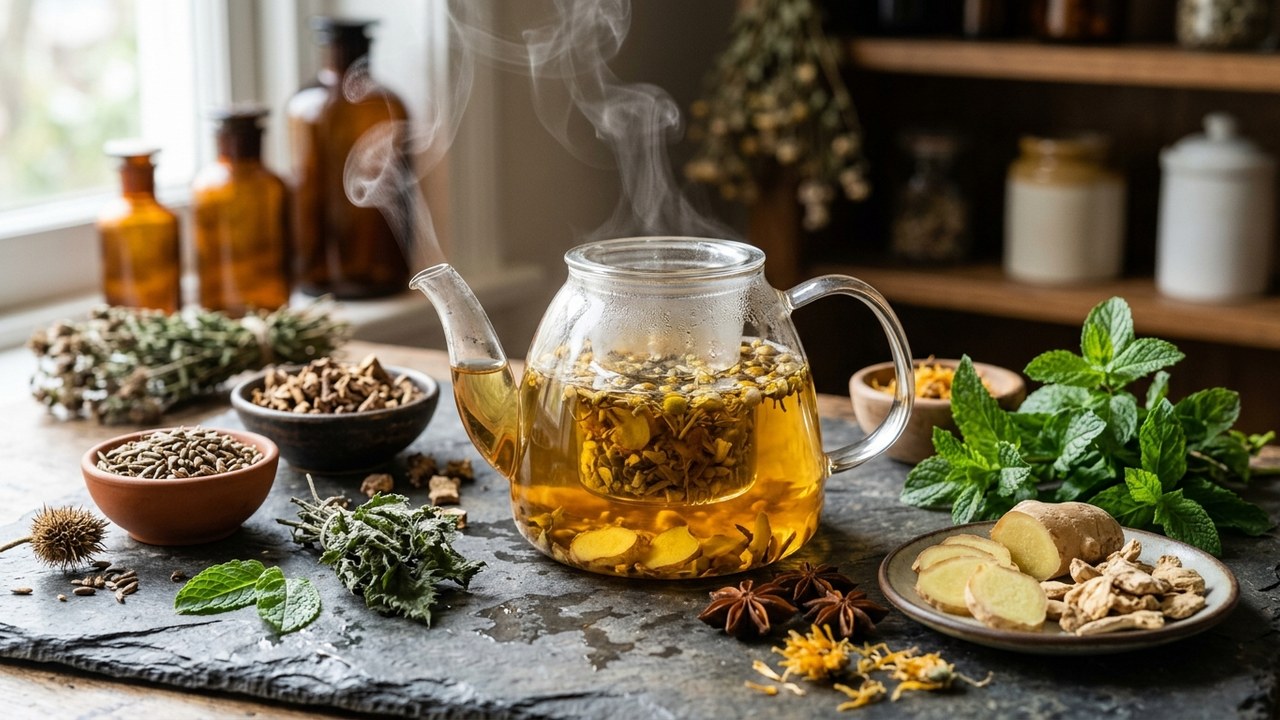
After festive holidays or continuous social drinking, many of our colleagues and family members purchase liver detox tea bags advertised to cleanse the body in just a few days. They believe that a lighter stomach and frequent bowel movements are clear signs that toxins are being flushed out. However, behind this instant feeling of relief lies a dangerous biological misconception.
In biomedical laboratories, we view the liver as an exceptionally sophisticated metabolic factory. The liver never sleeps and never requires sudden purge cycles. What the liver truly needs to neutralize toxins from alcohol, chemicals, and processed foods is seamless coordination between two biochemical phases: Phase 1 and Phase 2. Using unverified detox teas can disrupt this harmony, pushing liver cells into severe oxidative stress.
"The liver cell operates like a two stage waste processing plant. Phase 1 is the dismantling team that breaks complex toxic cargo into smaller fragments, but this process generates hazardous toxic dust. Phase 2 is the packaging team that seals those toxic dust particles inside secure containers for garbage trucks to haul away. Rapid detox teas merely force the dismantling team to work at overdrive without supplying enough containers for the packaging team. As a result, the liver plant gets flooded with toxic dust, causing oxidative damage."
Molecular Pathway Flowchart
Trà thải độc trôi nổi / Độc tố
Kích thích quá mức Phase 1 / CYP450
Tích tụ trung gian độc hại
Thiếu hụt Glutathione & Glycine Phase 2
Tổn thương tế bào gan & Tăng men gan
The Biological Mechanism Behind the Liver's Two Phase Detoxification
All fat soluble toxins entering our bodies, ranging from tobacco smoke, alcohol, and pesticide residues to food additives, tend to accumulate in adipose tissue unless transformed by the liver into water soluble compounds for excretion via urine or bile.
In Phase 1 (Bio-transformation), the Cytochrome P450 (CYP450) enzyme family performs oxidation, reduction, or hydrolysis on foreign substances. This process attaches a polar functional group to the toxin molecule. However, the intermediate metabolites produced in Phase 1 are often significantly more reactive and toxic than the parent compounds. They are, in fact, damaging free radicals.
To safeguard cellular structures, Phase 2 (Conjugation) must immediately step in. Conjugating enzymes such as Glutathione S-transferase (GST) or UDP-glucuronosyltransferase (UGT) attach a water soluble molecule like Glutathione, Glucuronic Acid, or Glycine to these reactive intermediates. Consequently, the toxins become completely benign and ready for harmless excretion by the kidneys or gallbladder.
The Pitfall of Rapid Detox Teas and the Micronutrient Comparison Table
Most commercial detox teas contain two main categories of ingredients: potent laxative botanicals like Anthraquinone containing herbs (such as senna leaves) and herbs that excessively accelerate Phase 1 enzymes. The resulting frequent bowel movements trick consumers into believing toxins are leaving their body, whereas it is merely acute fluid and electrolyte loss.
When Phase 1 is overstimulated while Phase 2 remains bottlenecked due to a shortage of conjugating micronutrients, highly reactive intermediate metabolites flood the liver. They directly attack cell membranes and DNA, precipitating localized liver injury and elevating liver enzymes (ALT, AST).
The following table contrasts the micronutrient demands and biological functions of both metabolic phases in the liver:
| Biological Feature | Phase 1 (CYP450 Transformation) | Phase 2 (Conjugation Phase) |
|---|---|---|
| Primary Objective | Convert fat soluble toxins into polar intermediate compounds | Attach water soluble molecules to completely neutralize toxicity |
| Generated Products | Highly reactive intermediate metabolites, free radicals | Inert, water soluble molecules easily excreted via bile/urine |
| Essential Micronutrients | B-Vitamins (B2, B3, B6, B12), Folate, Iron, Flavonoids | Glutathione, N-Acetyl Cysteine (NAC), Glycine, Taurine, Sulforaphane |
| Imbalance Risks | Accumulation of free radicals causing oxidative stress | Re-absorption of toxic intermediates due to depleted conjugating agents |
Practical Application and Nutritional Strategies to Optimize Liver Health
Instead of purchasing dehydrating rapid detox tea products, nurturing your liver's metabolic engine requires a consistent, daily nutritional strategy that supplies adequate raw materials for both phases.
First, increase your intake of Cruciferous Vegetables such as broccoli, broccoli sprouts, cabbage, and kale. These plants are exceptionally rich in Sulforaphane and Indole-3-carbinol, bioactive phytochemicals proven to robustly upregulate Phase 2 enzymes via the Nrf2 cell signaling pathway.
Second, ensure adequate supply of sulfur containing amino acids like Cysteine and Methionine from eggs, poultry, sunflower seeds, or N-Acetyl Cysteine (NAC) supplementation. These serve as the foundational precursors for liver cells to synthesize Glutathione, the master Phase 2 antioxidant.
Third, shield Phase 1 activity using natural dietary antioxidants found in moderate green tea (EGCG), turmeric (Curcumin), and berries. These compounds scavenge reactive oxygen species generated during Phase 1 processing.
Finally, maintain a daily fluid intake of 2 to 2.5 liters and strictly limit alcohol consumption. Remember that restful sleep between 11 PM and 3 AM remains the golden window for hepatic cellular regeneration and optimal waste clearance.
Putting it into practice — safely
What you can do
- Incorporate 200-300g of cruciferous vegetables (broccoli, cabbage) daily to upregulate Phase 2 enzymes.
- Ensure adequate high quality protein intake (eggs, fish, poultry) to supply necessary Glycine and Cysteine.
- Maintain 2 to 2.5 liters of water daily and go to bed before 11 PM.
When to talk to a doctor
Consult a physician immediately if you develop symptoms such as jaundice (yellowing eyes/skin), dark tea colored urine, or right upper quadrant abdominal pain.